
French onion soup might look simple at first glance, but honestly, there’s a lot of wiggle room. Sometimes you want that deep, slow-cooked classic; other days, you need something you can whip up on a weeknight. And hey, maybe you’re after a meatless bowl that’s still warm and comforting.
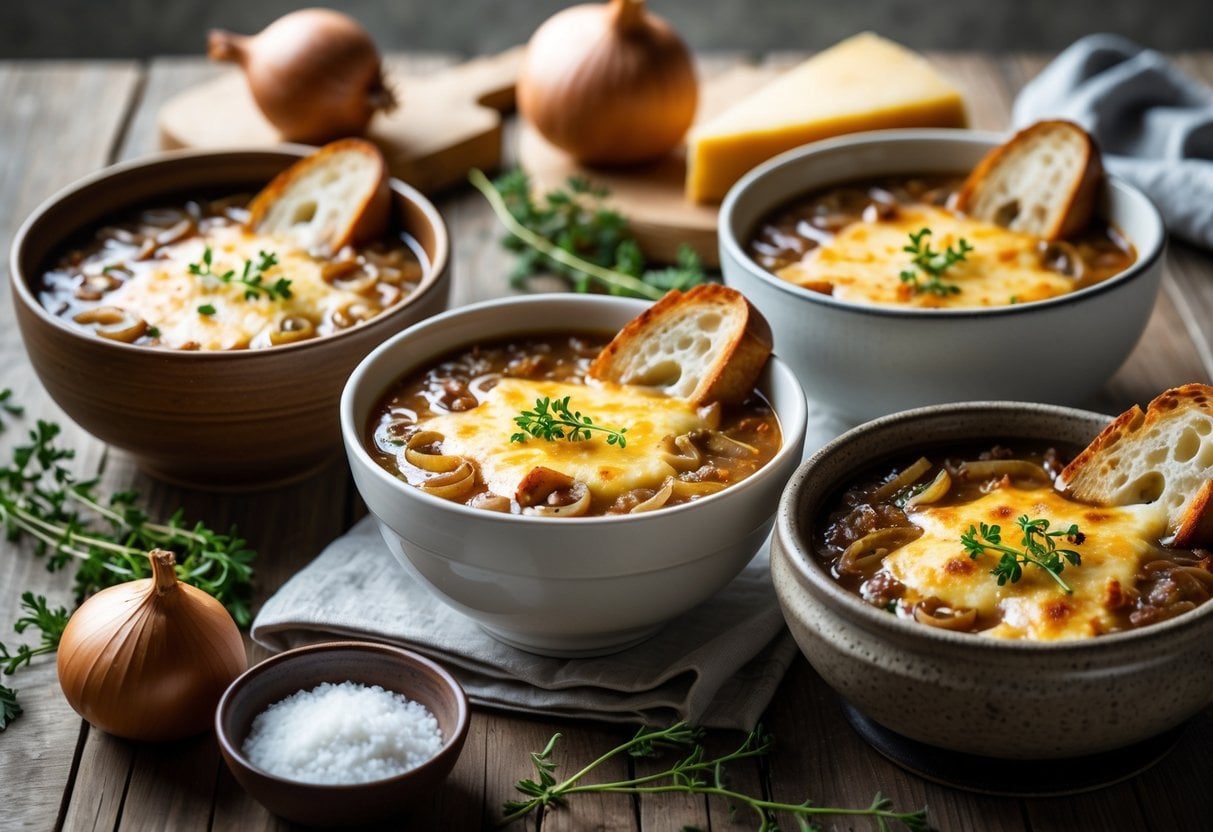
There’s really no one “official” recipe for French onion soup. You can go classic, keep it quick, or even make it vegetarian—what matters is that it still tastes like itself. The soul of the soup? Caramelized onions, a savory broth, and that legendary cheesy bread on top.
We’ll dive into what makes this soup tick, how onions work their magic, and how even tiny tweaks can change the whole vibe. The recipes coming up go from traditional to lighter to veggie, so you can pick what suits your mood (and your pantry).
Table of Contents
- So, What Actually *Is* French Onion Soup?
- Key Ingredients: What You Really Need
- How to Caramelize Onions (Without Losing Your Mind)
- How to Build That Soup Base
- Cheesy Toast: Don’t Skip This Step
- Recipe Variations & Ingredient Swaps
- RECIPE: Classic French Onion Soup (Old-School Style)
- RECIPE: Weeknight French Onion Soup (Quick & Light)
- RECIPE: Vegetarian French Onion Soup (Rich & Cozy)
- Serving & Presentation Hacks
- How to Keep French Onion Soup Fresh & Safe
- Common Problems & Pro Tips
- French Onion Soup FAQs (Stuff People Actually Ask)
So, What Actually *Is* French Onion Soup?
French onion soup is a hot onion soup built around deeply caramelized onions and a savory broth. You usually finish it off with bread and gooey melted cheese, which turns it into the ultimate comfort food. It’s a French classic for a reason.
A Little History
French onion soup started out as a humble, thrifty meal in France. People used onions, bread, and whatever broth they had—onions were cheap, kept forever, and got surprisingly sweet and rich when cooked low and slow.
Eventually, this soup made its way from home kitchens into cafés and bistros, getting fancier with splashes of wine and that signature cheesy bread topper. These days, there are tons of takes on it, but they all stick to the same basic method.
What Makes It “French Onion Soup” Anyway?
This soup is really about the technique, not some strict recipe. It’s defined by *how* you cook it, not just what goes in.
The must-haves:
- Slow-cooked onions—soft, brown, and never rushed
- A savory broth—usually beef, but there’s room to play
- Dry wine—for depth and a little fancy edge
- Bread and melty cheese—Gruyère is the classic, but hey, use what you’ve got
Swap a few ingredients if you need to; as long as you build that deep onion flavor and serve it piping hot, you’re making the real deal.
Key Ingredients: What You Really Need
French onion soup is all about a handful of core ingredients. Each one seriously changes the flavor, texture, and overall feel. You can swap things around, but these choices matter most.
Let’s Talk Onions
The soup lives and dies by its caramelized onions, so pick wisely. Yellow onions are the go-to—they’re just sweet and sharp enough as they cook down.
If you use sweet onions, the soup comes out, well, sweeter and a bit softer. Some folks like that! But if you want a big, savory punch, maybe don’t use only sweet ones.
Want to mix it up? A little shallot, leek, or even a touch of red onion can add a nice twist. Just don’t let them take over. And whatever you use, slice ‘em evenly so they all brown together (nobody wants burnt bits).
Broth & Stock Choices
The broth is your foundation. Beef stock is the classic—it’s rich, full-bodied, and a bit gelatinous. Beef broth is a bit lighter but still works great, especially at home.
Go for low-sodium beef broth if you can. The soup reduces as it simmers, so you don’t want it to get crazy salty. You can always add more salt at the end.
Other options if you’re feeling adventurous:
- Chicken broth—lighter, a little brighter
- Vegetable broth—for a meatless twist
Whatever you pick, make sure it actually tastes good. Weak broth will drag down even the best onions.
Cheese: The Good Stuff
The cheese and bread are what make this soup a meal. Gruyère is the classic—melts beautifully, tastes nutty and savory. It’s hard to beat.
But if you’re out of Gruyère, try:
- Swiss cheese—mild, melts well
- Mozzarella—for stretch, though not much flavor
- A sprinkle of parmesan for salty depth (don’t overdo it)
Grate it fresh if you can. And always melt it over the bread, not straight into the soup, or you’ll end up with a weird, cloudy mess.
Herbs & Seasonings
Herbs are the backup singers here. Fresh thyme gives a gentle, earthy vibe. Toss in whole sprigs so you can fish them out later.
Bay leaves add quiet depth—just one or two, and remember to pull them out before serving. Rosemary is nice in tiny amounts, but it can take over if you’re not careful.
Keep it simple: salt and black pepper. Taste often as you go, especially as the soup reduces. You want savory, not salty, and you want those onions to shine.
How to Caramelize Onions (Without Losing Your Mind)
Caramelized onions are the backbone of this soup. Flavor, color, depth—it’s all in your hands, depending on the onions you pick, how you cut them, and how patient you are with the heat.
Tips & Tricks for Caramelizing
Start with yellow onions—they’re the most balanced. They brown up nicely and keep their shape. Sweet onions go faster and taste milder, and shallots give a subtle savory note. Sometimes I throw in a little leek for a gentle onion flavor.
Slicing evenly is key. Thinner slices brown faster; thicker ones hold a little bite. Choose your adventure.
Butter, oil, or both? Butter gives flavor, oil keeps things from burning. I usually do a mix.
Stir often, but don’t hover. Let the onions sit so they get some color, then scrape up the brown bits. Don’t add liquid too soon or you’ll miss out on that golden goodness.
Little cheats that help:
- Pinch of salt at the start to draw out moisture
- Tiny pinch of sugar if the onions just won’t brown (sometimes they’re stubborn)
How Long Does It Take?
Keep the heat low to medium. Too hot and you’ll scorch them before they sweeten. Plan on 35–45 minutes for that deep, jammy caramelization.
Don’t watch the clock—watch the color. You want them soft, golden, and almost sticky.
If the pan gets dry, splash in a bit of water or broth and scrape up the flavor. It keeps things moving without stopping the browning.
Use a big, heavy pot if you have one. Crowded onions just steam and go pale.
Quick cheat sheet:
| Heat Level | Time Range | Result |
|---|---|---|
| Medium-high | 15–20 min | Soft, lightly golden |
| Medium-low | 35–45 min | Deep caramelized |
Honestly, patience is everything here. There’s just no rushing it.
How to Build That Soup Base
Once your onions are caramelized, it’s time to turn them into soup. That means adding liquid, getting all the flavor off the bottom of the pot, and giving everything time to come together.
Deglazing & Thickening (The Fun Part)
When your onions are deep brown, turn the heat down and pour in some dry white wine or sherry. Use a wooden spoon to scrape up all those tasty brown bits. That’s where the magic lives.
About ½ cup of wine for a regular pot does the trick. Let it bubble for a few minutes—just enough for the alcohol to cook off and the liquid to reduce a bit.
Want it a little thicker? Sprinkle in a tablespoon of all-purpose flour and stir until it coats the onions. Cook it for a minute or two to get rid of any raw taste.
Some folks add a splash of Worcestershire sauce here. It’s not traditional, but it adds a savory kick without being overwhelming.
Simmering: Broth, Herbs, and Patience
Pour in hot beef broth or beef stock once things smell amazing. Stock gives you more body; broth is a bit lighter. Use 5–6 cups, depending how thick or thin you like your soup.
Add thyme and a bay leaf. Keep the heat low—no boiling! Stir now and then so nothing sticks.
| Ingredient | Purpose |
|---|---|
| Beef broth | Clean, savory flavor |
| Beef stock | Richer texture |
| Thyme | Earthy aroma |
| Bay leaf | Subtle depth |
Let it simmer for 20–30 minutes. Taste and adjust salt and pepper before serving. Don’t be shy about tweaking—it’s your soup.
Cheesy Toast: Don’t Skip This Step
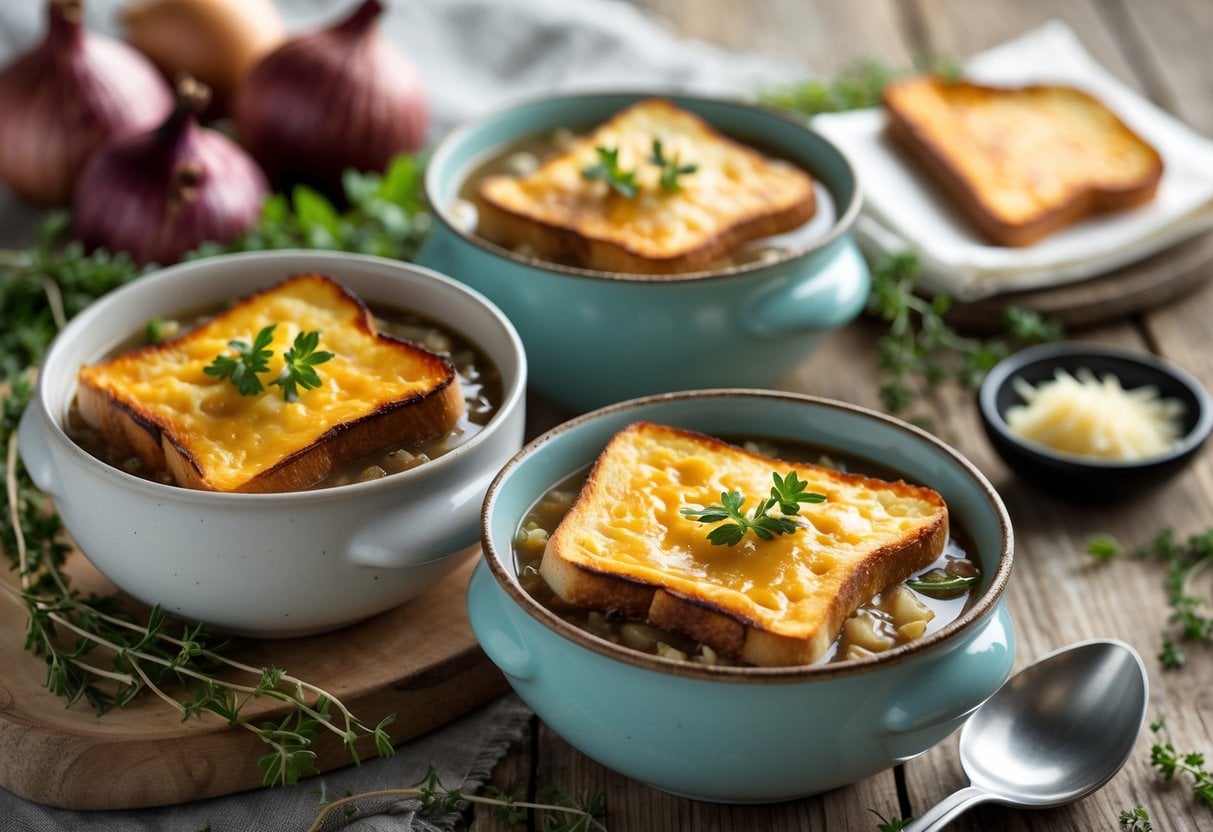
The cheesy toast is just as important as the soup itself. You want sturdy bread, a golden top, and cheese that melts instead of turning greasy.
Let’s Toast That Bread
Grab a loaf of french bread or maybe a whole-wheat baguette if you’re feeling a little healthier. Slice it up—about ¾ inch thick is just right. Any thinner and it’ll disappear in your soup, any thicker and, well, you’ll be chewing forever.
Toast the bread first, before you even think about cheese. Seriously, don’t skip this step. It keeps the toasted bread from turning into a sad, soggy mess when it hits the broth.
Stick with the oven or broiler—forget the frying pan. Just lay those slices on a dry sheet pan and toast ‘em up till both sides are a little firm and golden brown. Easy.
Want to level up the flavor? Brush the bread with a bit of butter or olive oil before toasting. A decent toasted baguette ends up crisp around the edges but still a little soft in the middle. That’s the good stuff.
Which Bread’s Best?
| Bread type | Why it works |
|---|---|
| French bread | Classic, sturdy, and lets the soup shine |
| Whole-wheat baguette | Nutty, holds its shape, adds a bit of character |
Picking & Melting the Cheese
Go for cheese that melts nice and smooth, adds salt, but doesn’t take over the whole bowl. Gruyere is the gold standard—melts like a dream, browns up beautifully.
Swiss cheese is a solid backup. Mozzarella cheese gives you that epic stretch, but honestly, it’s a bit bland on its own, so mix it with something punchier.
Parmesan cheese is great for a flavor kick, just don’t use too much. It won’t melt into gooey goodness by itself.
And hey, grate your own cheese if you can. Pre-shredded stuff has starches that mess with melting—nobody wants that.
Favorite Cheese Combos
- Gruyere + parmesan
- Swiss cheese + mozzarella
- Gruyere + mozzarella
Broil your cheesy toast until the top is bubbling and just starting to turn golden. Serve it hot—let that cheesy bread melt right into the soup instead of just floating on top.
Recipe Variations & Ingredient Swaps
You can totally switch up a French onion soup recipe and still keep that classic vibe. Just stick to the basics: caramelize those onions, make a savory broth, and finish with bread and cheese. The rest? Up to you.
Vegetarian & Vegan Tweaks
Making onion soup without meat? Totally doable. Swap out beef broth for a good vegetable broth—roasted veggies or mushrooms give it that depth you want, no meat needed.
Vegetarian? Butter’s great, but olive oil works too (and it won’t burn as fast). A lot of folks use a mix of both. Why not?
For vegan soup, stick with olive oil only and skip the cheese, or go with a plant-based option. If you want more umami, add one of these:
- Soy sauce or tamari—about a tablespoon
- A few dried mushrooms (fish them out before serving)
- A splash of sherry or white wine
These swaps keep your onion soup rich and savory, just the way it should be.
Mixing Up the Onions
Yellow onions are the go-to for most soups, especially onion soup. They caramelize nicely and keep their flavor after a long simmer.
But hey, you can mix up your onion types for a twist:
| Onion Type | What It Adds |
|---|---|
| Sweet onions | Softer, mellow sweetness |
| Red onions | A little sharpness and some color |
| White onions | Clean, light flavor—pretty subtle |
Try blending yellow and sweet onions for an American-style soup. Just go easy with sweet onions—they brown fast and burn if you’re not watching. Whatever you do, slice onions thin and cook them slow and low. No shortcuts here.
Switching Up Cheese & Bread
Gruyère is the classic cheese for French onion soup—melts perfectly, tastes nutty but not overpowering.
Or try these:
- Swiss or Emmental—similar melt, classic taste
- Provolone—mild, stretchy, fun on top
- Mozzarella—best when you mix in some parmesan
Always go for low-moisture cheese and shred it yourself. Trust me, it melts better.
Baguette is king for bread, but you can use whatever you’ve got. Sourdough brings tang, whole grain adds a little crunch. Just toast it first—no one likes soggy bread in their soup.
RECIPE: Classic French Onion Soup (Old-School Style)
This classic French onion soup is all about patience and a handful of simple ingredients. You get flavor by slowly browning the onions, using a rich broth, and finishing with bread and gooey cheese. There’s just no rushing it.
Ingredients (Good for 4-6 people)
3 tablespoons butter
2 tablespoons olive oil
4 large yellow onions, thinly sliced
½ teaspoon sugar (optional)
1 teaspoon salt
2 cloves garlic, minced
½ cup dry white wine
6 cups beef broth
1 bay leaf
2–3 sprigs fresh thyme (or ½ teaspoon dried thyme)
Black pepper, to taste
Baguette slices, toasted
1 ½ cups grated Gruyère cheese
Instructions
- Melt butter and oil in a large pot over medium heat.
- Add onions, salt, and sugar. Cook 35–45 minutes, stirring often, until deeply caramelized.
- Add garlic; cook 30 seconds. Deglaze with wine, scraping the pot.
- Add broth, bay leaf, thyme, and pepper. Simmer 20–30 minutes.
- Remove herbs. Ladle soup into oven‑safe bowls, top with baguette and cheese.
- Broil until cheese is bubbly and golden.
What You’ll Need (& Why)
You don’t need a ton of ingredients, but every one matters in this onion soup recipe. Yellow onions are your friend—they get sweet and flavorful as they cook. Slice them thin and try to keep them even so they brown up together.
Use butter with a splash of olive oil—that combo adds flavor and keeps things from burning. Go for a dry white wine (not sweet) to brighten up the soup. Beef broth is what makes classic French onion soup so rich and cozy.
| Key Ingredient | Why It Matters |
|---|---|
| Yellow onions | Caramelize well, turn sweet and deep |
| Beef broth | Gives you that savory, full-bodied base |
| Gruyère cheese | Melts like a pro, browns up just right |
Toast your baguette first—otherwise, it’ll just fall apart under the cheese.
What to Do (and What Not to Do)
Do cook the onions slow and steady. Give it at least 35 minutes on low-to-medium heat. Stir often, watch the color. Deep brown means flavor—blackened edges mean you got distracted.
Do season early. Salt brings out moisture and gets things browning faster. If your onions aren’t sweet enough, a small pinch of sugar helps, but don’t overdo it.
Don’t rush it. High heat will torch your onions before they get tasty. That’s a fast track to bland soup.
Don’t drown your soup in cheese and bread. You want balance, not a casserole. The toppings should lift the soup, not bury it.
This method is the heart of three recipes for French onion soup—no shortcuts, just the real deal.
RECIPE: Weeknight French Onion Soup (Quick & Light)
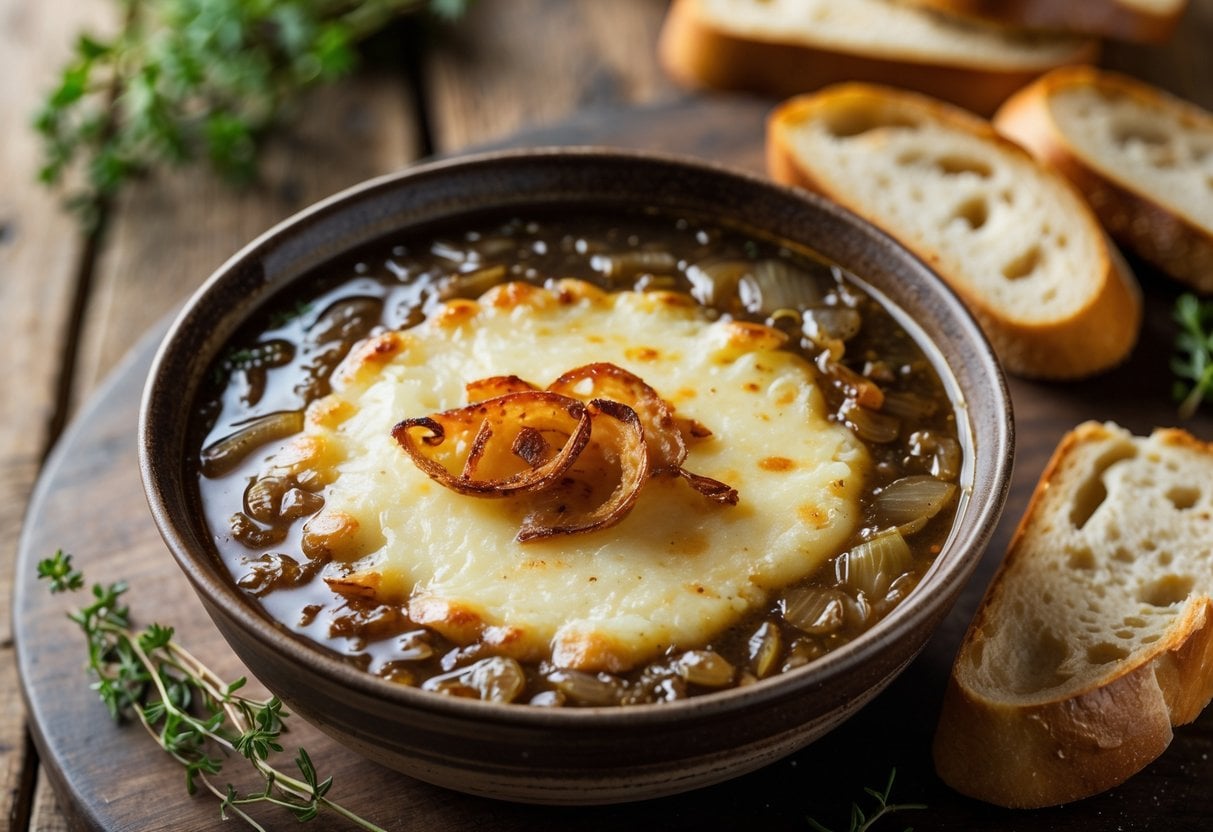
This version is all about getting dinner on the table fast, with fewer steps and lighter ingredients. You still get that oniony punch, a savory broth, and the classic bread-and-cheese topper, just without all the waiting around.
Ingredients (Good for Four)
2 tablespoons olive oil
3 large yellow or sweet onions, sliced
1 teaspoon salt
½ teaspoon dried thyme
4 cups chicken broth
1 tablespoon Worcestershire sauce (optional)
Black pepper, to taste
Toasted bread
1 cup Swiss or provolone cheese
Instructions
- Heat oil in a pot over medium‑high heat. Add onions and salt.
- Cook 15–20 minutes, stirring often, until golden and soft (not deeply caramelized).
- Add thyme, broth, Worcestershire, and pepper. Simmer 15 minutes.
- Serve topped with bread and melted cheese (broiler or microwave works).
What You’ll Need & How to Prep
This weeknight French onion soup skips the marathon caramelizing. You use golden onions instead of deep brown, so it’s lighter and way quicker.
Here’s what you need:
- Olive oil instead of butter for a lighter base
- Yellow or sweet onions for a mellow flavor
- Chicken broth for a cleaner, lighter soup
- Dried thyme for easy herby notes
- Swiss or provolone cheese (melts like a champ)
- Toasted bread, of course
Slice onions as evenly as you can—they’ll cook faster. Use a wide pot to let moisture escape. Grate your cheese and toast the bread ahead of time to make things even quicker.
Tips for Fast, Tasty Soup
Cook the onions till they’re soft and golden, not dark. You’ll cut the time in half and still get a great onion flavor for your homemade French onion soup.
Use medium-high heat, stir a lot so nothing burns. Add broth when onions are jammy and smell sweet. A splash of Worcestershire sauce gives it a little extra depth without weighing things down.
Melt the cheese under the broiler if you can, or even the microwave if you’re in a rush. This lighter French onion soup is perfect for busy nights and still totally hits the spot as one of three recipes for French onion soup.
RECIPE: Vegetarian French Onion Soup (Rich & Cozy)
This vegetarian French onion soup keeps all the classic steps but swaps out the meat broth for some clever, savory moves. Slow-cooked onions, a splash of wine, and a little salty boost bring that deep homemade French onion soup flavor—even without beef broth.
Ingredients
- 3 tablespoons butter or olive oil
- 4 large yellow onions, thinly sliced
- 1 teaspoon salt
- 1 tablespoon soy sauce or tamari
- ½ cup dry sherry or dry white wine
- 6 cups vegetable broth
- 1 bay leaf
- ½ teaspoon dried thyme
- Black pepper, to taste
- Baguette slices
- 1 ½ cups grated Gruyère or Swiss cheese
How to Make It
- Heat the butter or oil in a big pot over medium. Toss in onions and salt.
- Let them cook for 40–45 minutes, stirring often, till they’re deep brown and super soft.
- Add soy sauce and wine. Let it simmer 2–3 minutes to reduce a bit.
- Pour in broth, bay leaf, thyme, and pepper. Simmer for 25 minutes.
- Take out the bay leaf. Serve with bread and cheese, then broil till it’s all melted and bubbly.
Real-World Tips for Vegetarian French Onion Soup
Honestly, onions need your full attention here. Give 'em a good stir every so often and don’t be afraid to drop the heat if they start sticking. Getting that deep color is where the flavor magic happens, but if you burn them, well… the soup’s kind of a lost cause.
A splash of soy sauce or tamari can help fake some of that classic savory depth. Go easy, though—too much and you’ll end up with soup that’s just salty. Dry sherry brings cozy warmth, while white wine keeps things a bit brighter. Either one works for this French onion soup riff.
Always toast your baguette slices before tossing them in. Otherwise, they’ll just sink and get soggy fast. And grating the cheese nice and fine? It melts so much faster and more evenly under the broiler.
If you’re going vegan, swap in olive oil and your favorite dairy-free cheese. The method stays the same, and you still get all that rich, comforting flavor.
Serving & Presentation Hacks
How you serve French onion soup really makes or breaks it. The bowls, timing, even the way you set it up—these things matter just as much as the broth and onions, honestly.
Broiling the Old-School Way
If you want that classic, gooey top, you’ve gotta broil the soup in oven‑safe bowls. Ladle the hot soup in, but leave a little room at the top. Add a slice or two of toasted baguette—enough to float, but not so much it sinks.
Then, pile on grated cheese. Gruyère is the go-to, but Swiss or Comté totally work. Set those bowls on a sturdy baking sheet so you don’t burn yourself or make a mess.
Fire up your broiler and set the bowls about 5–6 inches from the heat. Broil them for 2–4 minutes—just until the cheese is melted and lightly golden. Keep an eye on it, though. It can go from perfect to burnt in a flash.
Warming the bowls first isn’t a bad idea—your soup stays hot longer that way. This setup is great for 4 servings and keeps everything pretty even.
Other Ways to Serve (If You’re Short on Time or Gear)
No broiler? No problem. You can just serve the soup straight from a Dutch oven and let everyone add their own toppings. Super chill for weeknights or casual hangouts.
Try one of these:
- Toast + cheese on the side: Let people top their own bowls however they want
- Melted cheese croutons: Broil bread and cheese separately, then toss them on top
- Big casserole dish: Layer soup, bread, and cheese, then broil the whole thing
For a crowd, keep the soup hot on low and have the bread toasted ahead of time. Grate the cheese in advance and stash it in the fridge. This keeps everything crisp and melty, and makes life way easier when it’s time to serve.
How to Keep French Onion Soup Fresh & Safe
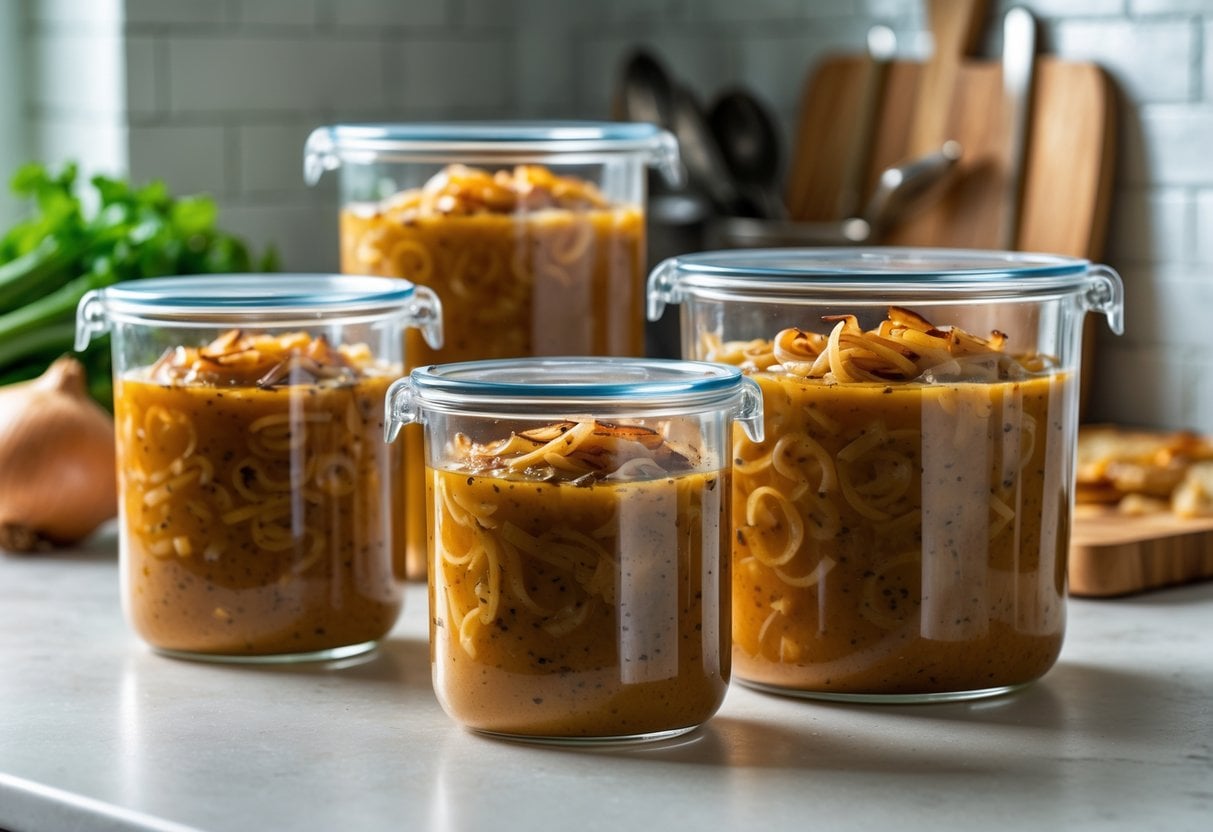
Want your French onion soup to taste just as good the next day? It’s all about cooling it down, keeping it airtight, and reheating with a bit of care. Timing and temperature really do matter, especially if there’s bread or cheese involved.
Fridge Storage & Shelf Life
Let your soup cool off to room temp before you tuck it away. Pop it into an airtight container and seal it up tight—air is not your friend here.
Stick it in the fridge at 40°F (4°C) or colder. Try to eat it within 3–4 days for the best flavor (and, you know, safety). Slap a date on the container so you’re not playing the guessing game later.
If you’ve already added bread or cheese, it’s best to store those separately. Otherwise, the bread gets soggy and the cheese goes weird. Just add toppings when you reheat and serve.
Freezing, If You’re Into That
Need to stash soup for longer? Freeze it. Let it cool, then portion into freezer-safe containers or sturdy freezer bags. Leave about an inch of space for it to expand.
Only freeze the soup base—skip the bread and cheese, since they get funky after thawing. Add those fresh when you reheat.
If you’re using bags, lay them flat until they’re frozen. It saves space and thaws faster. For best results, use up frozen soup within 2–3 months. Technically it’ll last longer, but the flavor drops off after that.
| Storage Method | Best Timeframe |
|---|---|
| Refrigerator | 3–4 days |
| Freezer | 2–3 months |
Thawing & Serving After Freezing
Thaw frozen soup overnight in the fridge. It’s the safest way and keeps the onions from turning to mush. Don’t just leave it out on the counter—it’s not worth the risk.
If you’re in a hurry, use your microwave’s defrost setting, and stir it often to avoid those weird hot spots. Once it’s thawed, plan to eat it within 24 hours.
Before serving, toast up fresh bread and grate the cheese. Lightly toasted bread holds up better in the soup, and freshly grated cheese melts beautifully.
Warming It Up Again
Stovetop is best for reheating—medium-low heat and a stir every now and then. Warm it up until it hits 165°F (74°C).
Don’t let it boil like crazy. High heat can wreck the onions and make the broth taste flat. If it’s gotten too thick, just add a splash of broth or water.
Microwave works for small bowls—just heat in short bursts and stir between each one. Add bread and cheese after you’ve reheated, then finish under the broiler if you want that bubbly top.
Common Problems & Pro Tips
It’s wild how much the little stuff matters—heat, broth, toppings—when you’re chasing that perfect bowl of French onion soup. A few smart moves can really take things up a notch.
Stuff That Trips People Up
Most flops happen when you rush the onions. Cranking the heat browns them fast, sure, but you’ll get bitterness instead of sweetness. Low and slow is the way—deep brown, super-soft onions are what you want.
Another one: thin, weak broth. It just waters down all your hard work. Go with low-sodium broth so you can tweak the salt, and skip adding water at the end.
If your soup’s too sweet, it probably needs some acid. Caramelized onions are naturally sugary, so a splash of wine, sherry, or even a little vinegar can pull things back into balance.
Cheese disasters usually come from using the wrong bowls or untoasted bread. Stick to oven-safe bowls and always toast the bread first—it makes a difference.
Quick fixes for common issues:
| Problem | Cause | Fix |
|---|---|---|
| Bitter taste | Heat too high | Lower heat, stir often |
| Too sweet | No acid | Add wine or vinegar |
| Thin soup | Weak broth | Simmer longer |
Pro Tips for Next-Level Soup
Start with yellow onions—they hit the sweet-savory balance just right. If you want to mix in a sweet onion, go for it, but keep yellow onions in charge.
Use both butter and olive oil for the onions. Butter brings the flavor, oil keeps things from burning during that long cook.
When you add wine or broth, scrape up every bit from the bottom of the pot. That’s where the flavor hides.
Pick a cheese that melts well—Gruyère is classic, but Swiss or Comté are great too. Shred it yourself for the best melt and coverage (pre-shredded just doesn’t melt as smoothly).
Season at the end. Taste after simmering, then add salt, pepper, or a touch of acid if it needs it. That’s what separates good soup from the “wow, you made this?!” kind.
French Onion Soup FAQs (Stuff People Actually Ask)
French onion soup is all about a few simple techniques and some flexible ingredients. Here are answers to the questions people actually ask about onions, broth, cheese, timing, and storage—using what you probably already have at home.
What do you really need for classic French Onion Soup?
Onions, some kind of fat, broth, and bread with melty cheese on top. The classic combo is butter, yellow onions, beef broth, dry wine, and Gruyère cheese.
Don’t forget thyme, bay leaf, and black pepper for seasoning. That’s what gives you that familiar savory vibe.
Which onions are best for French Onion Soup?
Yellow onions are the MVP here. They caramelize well and keep that sweet-savory thing in check.
You can play around with sweet onions or even a mix of yellow, white, and red. Mixing it up adds depth, but the method’s the same.
How long does it take to caramelize onions for this soup?
If you want deep, jammy onions, you’re looking at 35 to 45 minutes on medium-low. Stir often and don’t rush.
If you’re in a hurry, you can push it and be done in 15–20 minutes, but the soup will be lighter and not as sweet.
What cheese should I use on top?
Gruyère is the classic—it melts beautifully and has that nutty flavor. Swiss, Comté, or Emmental work too.
In the U.S., people sometimes use provolone or mozzarella. They melt fine, but the flavor’s a bit milder.
How do I make French Onion Soup vegetarian?
Easy—just use vegetable broth instead of beef. You can use olive oil or butter for the onions.
A dash of soy sauce or tamari adds depth and replaces some of that savory punch you’d get from beef broth. Works like a charm!
How long can you keep French Onion Soup in the fridge?
Honestly, the soup base hangs in there pretty well—about three days in the fridge if you stash it in a sealed container. Just make sure you leave out the bread and cheese for now.
Toss the bread and cheese on top only when you're ready to reheat and eat. Trust me, this is the best way to dodge that dreaded soggy texture.
Leave a Reply