
Roman-Style Honey and Fruit Granita is about as close as you’ll get to tasting a real ancient Roman luxury dessert, made with simple flavors that have stuck around for centuries. Picture it: the kind of cool treat Roman elites might have savored in the heat, using snow carried down from distant mountains, a drizzle of honey, and whatever fruit was in season. It’s a slice of history, right in your bowl.
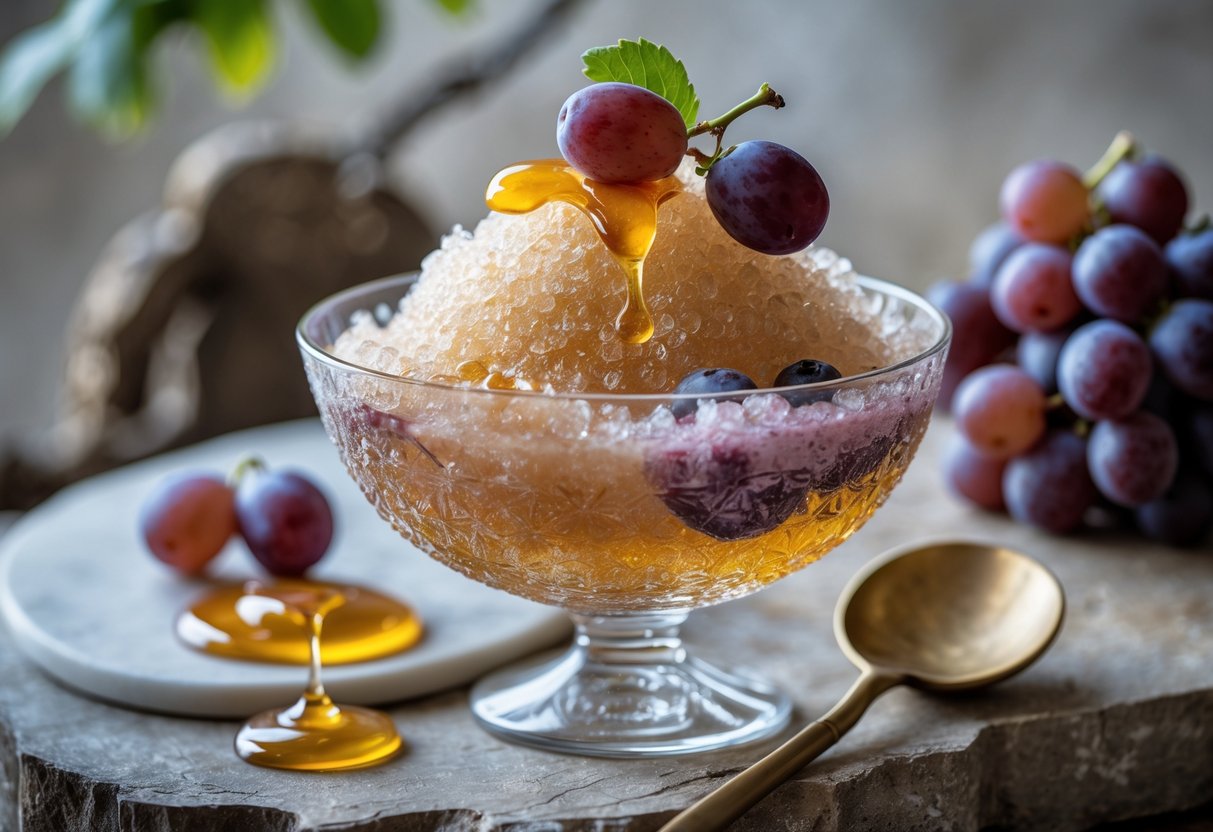
There’s no ice cream here, no dairy—just bold grape juice (or any fruit juice of your choice), sweet honey, and maybe a hit of lemon, all frozen and scraped into those light, flaky crystals. This granita is a nod to tradition, a sweet, icy treat that’s dead simple to make and honestly not far off from what ancient Romans might’ve eaten on a blazing summer afternoon.
If you’re into ancient food (or just want to wow your friends with something a little different and historic), this Roman-style granita is a pretty cool way to time-travel in your own kitchen.
Table of Contents
Origins of Roman-Style Granita or Sorbet
Roman-style granita—or sorbet, if you want to call it that—started as simple, elegant desserts built around snow or ice, sweetened with honey and fruit. These treats, rooted in Roman tradition, used only what was naturally available, long before anyone had even dreamed of a freezer.
Historical Roots in Ancient Rome
Back in ancient Rome, only the wealthy had access to snow and ice. Snow was hauled in from mountains like the Apennines and stored in deep pits called nivaria to keep it cold through the summer.
Writers like Pliny the Elder and Seneca talked about snow not just for chilling wine, but also as the grand finale to extravagant feasts. Mixing snow with honey or fruit juice became a real status symbol—a way to show off at banquets and special occasions. These chilled treats were a mark of taste and luxury.
The method was straightforward: snow in a bowl, sweetened with honey, maybe some fruit juice, wine, or grape must. No one was churning anything creamy—these were simple, pure desserts, but their rarity made them special. In a way, they’re the ancestors of today’s granita or sorbet.
Influence of Roman Desserts and Ingredients
The ingredients for these desserts really show what Romans loved to eat and drink. Honey was the go-to sweetener—refined sugar just wasn’t a thing yet. It popped up everywhere, from desserts to drinks like mulsum (that’s wine mixed with honey). Grape juice, pomegranate, and other fruit juices were also prized.
Sometimes they’d pour mulsum, grape juice, or pomegranate juice over snow. Lemon was around, though not super common, and could add a nice tartness. Romans also liked to toss in a few herbs, like mint, for a little extra aroma.
No eggs, no dairy—just snow, honey, and fruit juice. That’s it. The result? Clean, bold flavors, easy to throw together, but impressive enough for the fanciest gatherings.
References in De Re Coquinaria and Apicius
De Re Coquinaria, the cookbook linked to Apicius, is packed with recipes using honey, wine, and fruit, though you won’t find a direct recipe for a frozen dessert. Roman cookbooks don’t spell out how to make sorbet or anything creamy and cold. Still, there are plenty of recipes where honey is mixed with fruit or wine for sweet sauces and drinks.
Pliny the Elder’s Natural History mentions snow for cooling and describes how food and wine were sometimes finished with honey-sweetened snow at banquets. Apicius’ recipes show a clear love for honey with fruit and syrups, which matches how these icy desserts were put together.
So, while there’s no ancient Roman step-by-step for sorbet, the descriptions and ingredients make it obvious: chilling fruit and honey with snow was a thing. Today’s honey and grape granita? It’s honestly a faithful tribute to Roman food traditions.
Key Ingredients and Flavors
For this recipe, Roman-style honey and grape granita gets its unique flavor from just a handful of ingredients. At its core, this dessert is all about grape juice, honey, and maybe some herbs or spices if you’re feeling adventurous. You can always play with the garnishes, too.
Fruit and Honey Basics
Grapes are the star of this granita recipe. You can swap in pomegranate juice for a different vibe, since both were popular back then in the Roman Empire. Just make sure to strain the juice so your granita turns out nice and smooth.
Honey is the sweetener of choice. Romans loved it for its flavor and how well it blended with fruit juices or snow. It brings a floral note and balances out the grape’s tartness. Adjust the honey to your own taste—want it sweeter? Add more. Prefer something lighter? Use less.
A squeeze of lemon juice isn’t required, but if you like things a little brighter and more tart, go for it. It can really lift the flavor, especially if your grape juice is on the sweet side.
Traditional Preparation Methods
This Roman-style honey and grape granita really comes from a tradition of using snow, ice, and whatever natural flavorings were on hand to make something cool and refreshing. Romans didn’t have freezers or ice cream, but they got creative with what they did have—honey, grape juice, wine, and snow if they could get it.
Granita Versus Grattachecca
Both the granita and grattachecca are icy desserts, but they’re not quite the same. Granita is that semi-frozen treat where you mix sweetened fruit juice or pulp with water, freeze it in a shallow pan, and scrape it as it sets. You get these beautiful, grainy crystals.
Grattachecca is more like a snow cone. It’s made by shaving a block of ice and pouring sweet syrups or fruit on top. In Rome, you’ll see grattachecca sold from street carts in summer, while granita is more of a Sicilian thing these days.
For Roman-style honey and grape granita, you use the granita approach—scraping the mixture as it freezes, no dairy, no fancy gear. It’s all about controlling the sweetness and the intensity of the flavors.
Ancient Freezing Techniques
Romans didn’t have fridges, so they relied on natural ice and snow brought down from the mountains. Wealthy families would stash snow in deep pits or cellars called nivaria, keeping it cold for desserts and drinks.
Here’s how they’d usually do it:
- Gather up fresh snow or ice.
- Mix it with honey, grape must, or wine (like mulsum—wine and honey together).
- Pour the flavorings over the snow and eat it fast before it melts.
The result wasn’t anything like today’s creamy ice cream. It was more of a slushy, crystalline treat—think granita or a super simple sorbet. The sweetener was honey, not sugar, and the fruit juice could be grape, pomegranate, or even a splash of wine for a little kick.
Roman Serving Styles
These icy desserts were a luxury, mostly for the rich, and usually served at the end of a big meal. You’d get a bowl or cup of flavored snow, sometimes with a drizzle of extra honey on top.
They might also serve the treat over crushed ice for an extra chill. On special occasions, you’d see fresh herbs like mint or bits of fruit added for a little aroma and a nice look.
Sometimes, they’d pour mulsum—a wine and honey mix—over the flavored snow, making it sweet and just a bit tangy. Bowls were usually simple—metal, glass, or clay. And you had to eat fast, since the Mediterranean heat didn’t do you any favors in keeping things cold.
It was practical, but also a sign of status. And really, it was all about enjoying pure, natural flavors cooled down with snow or ice.
RECIPE: Roman-Style Honey and Grape Granita
Making Roman-style granita is all about simple ingredients and a little ancient flair. You get a refreshing, icy dessert that’s actually rooted in real Roman tradition—no special equipment needed, just a freezer, fruit juice, and honey. Give it a try; you might be surprised how much you like it.
Ingredients:
- 2 cups grape juice (or pomegranate juice, both enjoyed in ancient Rome)
- 2–3 tablespoons honey (to taste)
- 1 tablespoon lemon juice (optional, for brightness)
- Crushed ice or shaved ice (for serving, optional)
Instructions:
- Mix:
In a bowl, combine the grape juice, honey, and lemon juice. Stir until the honey is completely dissolved. - Freeze:
Pour the mixture into a shallow dish or baking pan. Place in the freezer. - Scrape:
Every 30–45 minutes, use a fork to scrape and mix the ice crystals that form around the edges into the center. Repeat until the entire mixture is granular and slushy (about 3–4 hours). - Serve:
Fluff the granita with a fork and spoon it into small bowls or glasses. For a more authentic Roman touch, you can mound it over a bowl of crushed or shaved ice. - Optional Garnishes:
Drizzle a little extra honey on top or sprinkle with fresh herbs (like mint, which was used in Roman cuisine).
Notes:
- Romans would have used snow or ice imported from the mountains, but freezing and scraping juice recreates the same effect.
- This recipe is dairy-free and egg-free, just like the Roman original.
Tips
Romans were all about blending sweet and savory, so don’t be shy about experimenting with different flavors in tiny amounts.
Serve your granita pretty quickly, just like the Romans did—before it turns into a puddle. Simple glass cups or little bowls are perfect. If you’re feeling fancy, top with a fresh mint sprig for a subtle nod to Roman herbs. Skip the heavy toppings like cream; it’s better to keep it light and true to its roots.
Pairings and Culinary Context
Roman-style granita is basically ancient luxury in a bowl—icy, sweet, and bold. Picking the right foods to go with it makes the whole experience even better and gives a little nod to its history and texture.
Serving Granita in Roman Cuisine
This kind of honey and grape granita would’ve totally shown up at a fancy Roman banquet, especially if you had money to spare. The icy, refreshing texture must have been a lifesaver during hot weather or as a palate cleanser after a heavy meal. Back then, getting snow shipped in from the mountains was a major flex—imagine your host bragging about their imported snow dessert!
Romans mostly kept their sweets simple. Honey and fruit juice (or grape must) poured over snow or ice was pretty common. Other chilled desserts like pear patina (baked pears with honey and spices) or libum (those little honey cheese cakes) made appearances at big celebrations. All of them revolved around honey and fruit—see a pattern?
Granita just fit right in, working as either a palate cleanser or a light, refreshing way to end a meal that probably had a lot of rich food.
Complementary Dishes and Drinks
Pair your granita with foods that are simple and aromatic. Pear patina—soft, honeyed pears with a little spice—gives a nice warm/cool contrast. Libum, a soft cheese cake with honey, is creamy and sweet, which plays off the icy granita nicely.
If you’re looking for drinks, mulsum—Roman honey wine with spices—is a classic pairing, echoing the granita’s flavors. If you want to keep things modern but in the same spirit, a Muscat Canelli wine (think honey and citrus notes) works really well too.
For a balanced spread, try a fresh fruit salad with honey-lime dressing, or just set out some nuts and dried figs—both were staples at Roman tables.
Pairing Table
| Dish/Drink | Why it Works |
|---|---|
| Pear Patina | Sweet, soft, warm counterpoint |
| Libum | Creamy, mild, honeyed; balances icy texture |
| Mulsum (honey wine) | Enhances and reflects granita’s flavors |
| Muscat Canelli | Light, floral, supports grape notes |
| Fresh fruit salad | Keeps dessert light and colorful |
Festive and Seasonal Occasions
Roman-style granita really shines in warm weather—makes sense, right? Ancient writers mention these sorts of icy treats at summer banquets or during festivals for Bacchus, the god of wine and wild parties.
Serve it at a backyard get-together, a summer feast, or even at a holiday meal if you want something a little different. It’s also a fun touch at formal dinners where you want to sneak in a bit of classical history.
Granita is especially great at the end of a big meal, acting as a refreshing interlude between heavier courses. For a festive twist, put it out with bowls of libum and nuts for guests to nibble. And for kids or anyone skipping alcohol, just stick with grape or pomegranate juice—no one’s missing out.
Honestly, this dessert slips right into both historical reenactments and modern parties that appreciate simple, unique flavors.
Legacy and Influence on Modern Sweets
Roman-style granita is kind of the OG icy dessert. Just fruit juice and honey with ice—refreshing, elegant, and proof that simple flavors can be really impressive. That combo of sweeteners and ice actually paved the way for the frozen treats you’ll find in Italy and elsewhere today.
Adaptations in Italian Desserts
Modern Italian desserts, especially granita Siciliana, owe a lot to the Romans and their love for sweetened snow or ice.
Granita (the Sicilian kind) is made by freezing fruit juice or coffee with sugar, then scraping it to make those fluffy, icy crystals. The process really isn’t that different from what the Romans did—just swap honey and grape juice for whatever flavors you like, and you’re there.
That focus on fresh, pure flavors—no dairy, no fancy machines—still lives on. Granita, sorbetto, even Italian ice, all echo the Roman craving for cool, lightly sweet treats.
Here’s a quick table to show the connection between the old Roman stuff and what you’ll find in Italy now:
| Roman Iced Dessert | Modern Italian Equivalent | Key Ingredients |
|---|---|---|
| Snow with honey/juice | Granita, sorbetto | Fruit juice, sugar, ice |
| Crushed ice and syrups | Grattachecca (Rome) | Shaved ice, syrups |
Grattachecca is still a big deal in Rome. Vendors shave ice by hand and top it with syrups or fruit—honestly, it’s not so different from what Romans were eating centuries ago.
Continuing Tradition in Roman Food Culture
The whole icy, honey-sweetened treat tradition never really left Rome—it just evolved a bit.
All over the city, especially in summer, you’ll find grattachecca stands. Shaved ice, fruit syrups (including grape or pomegranate), and a vibe that feels like a direct line from ancient times. Sure, the tools are newer, but the idea is the same.
Roman flavors still show up in modern icy desserts—honey, grapes, pomegranate—paired with techniques that honestly haven’t changed much in two millennia.
Some of the most popular toppings at today’s stands?
- Fresh fruit pieces
- Herbal garnishes (mint)
- Drizzles of honey
- Lemon juice for brightness
It’s kind of amazing—every time you dig into a bowl of granita, you’re tasting a tradition that stretches all the way back to ancient Rome.
Frequently Asked Questions
Roman-style granita keeps things simple: a handful of authentic ingredients and a no-fuss freezing method. The inspiration is ancient, but the flavors and icy texture are timeless.
What ingredients are needed to make a traditional Roman-style granita?
You’ll need grape juice, honey, and maybe a splash of lemon juice if you want a bit of zing. Water or crushed ice is for serving, but honestly, it’s just fruit juice and honey at its core. The Romans didn’t mess with dairy, cream, or eggs in these desserts.
Can you substitute different types of honey or fruits in a Roman-style granita recipe?
Absolutely! Any honey works, though the flavor will shift a bit. Wildflower or acacia honey are both great picks. You can also use other juices—pomegranate was a Roman favorite. Some modern recipes use berries or citrus, but if you want to keep it old-school, stick with grape or pomegranate.
Are there any special techniques to achieve the perfect texture for a fruit and honey granita?
Honestly, freezing and scraping are what really matter here. You just pour your fruit and honey mix into a shallow dish, pop it in the freezer, and then, every 30–45 minutes, grab a fork and scrape it up. This is how you get all those tiny ice crystals—exactly what you want for that classic, grainy granita feel. If you try to blend it super smooth or churn it, you’ll miss the point (and the old-school Roman vibe).
How long does it take to prepare and freeze a Roman-style granita?
The prep is a breeze—seriously, mixing everything together only takes a few minutes. The freezing process is the slow part, usually around 3 to 4 hours, depending on your freezer’s mood. Just remember to scrape those forming ice crystals every half hour or so; that’s what gives you the right texture.
What are some serving suggestions for Roman-style granita?
Spoon the granita into little bowls or glasses, and fluff it up with your fork so it looks nice and airy. If you want to get a bit fancy, try drizzling on some extra honey or toss a few fresh mint leaves on top. Sometimes I’ll mound it over crushed or shaved ice for that extra rustic, Roman touch. Just don’t dawdle—it melts pretty fast once it hits room temp.
What is the origin and history of fruit and honey granita in Roman cuisine?
So, this dessert actually goes way back to ancient Rome. Back then, the wealthy would go to the trouble of having snow hauled in from the mountains just to chill their drinks and food—can you imagine? They’d take that snow or ice and mix in honey and fruit juice for flavor. No dairy, no fancy techniques, just simple ingredients. Granita, as the Romans made it, was a real luxury—a cool treat, but definitely not ice cream. Writers like Pliny the Elder and Seneca even mentioned these frosty desserts in their works, which is kind of neat if you think about it.
Leave a Reply