
Brinjal tawa fry is one of those easy Indian eggplant recipes that just works—simple, quick, and honestly, surprisingly addictive. If you are looking for a reliable brinjal recipe, this version is a great place to start. You take thick brinjal slices, coat them in warm spices, and let them sizzle on a hot pan until they’re golden outside and meltingly soft inside. Brinjal tawa fry is a spice‑marinated, shallow‑fried eggplant dish with a crisp crust and creamy center, usually served as a side with rice, dal, or sambar.
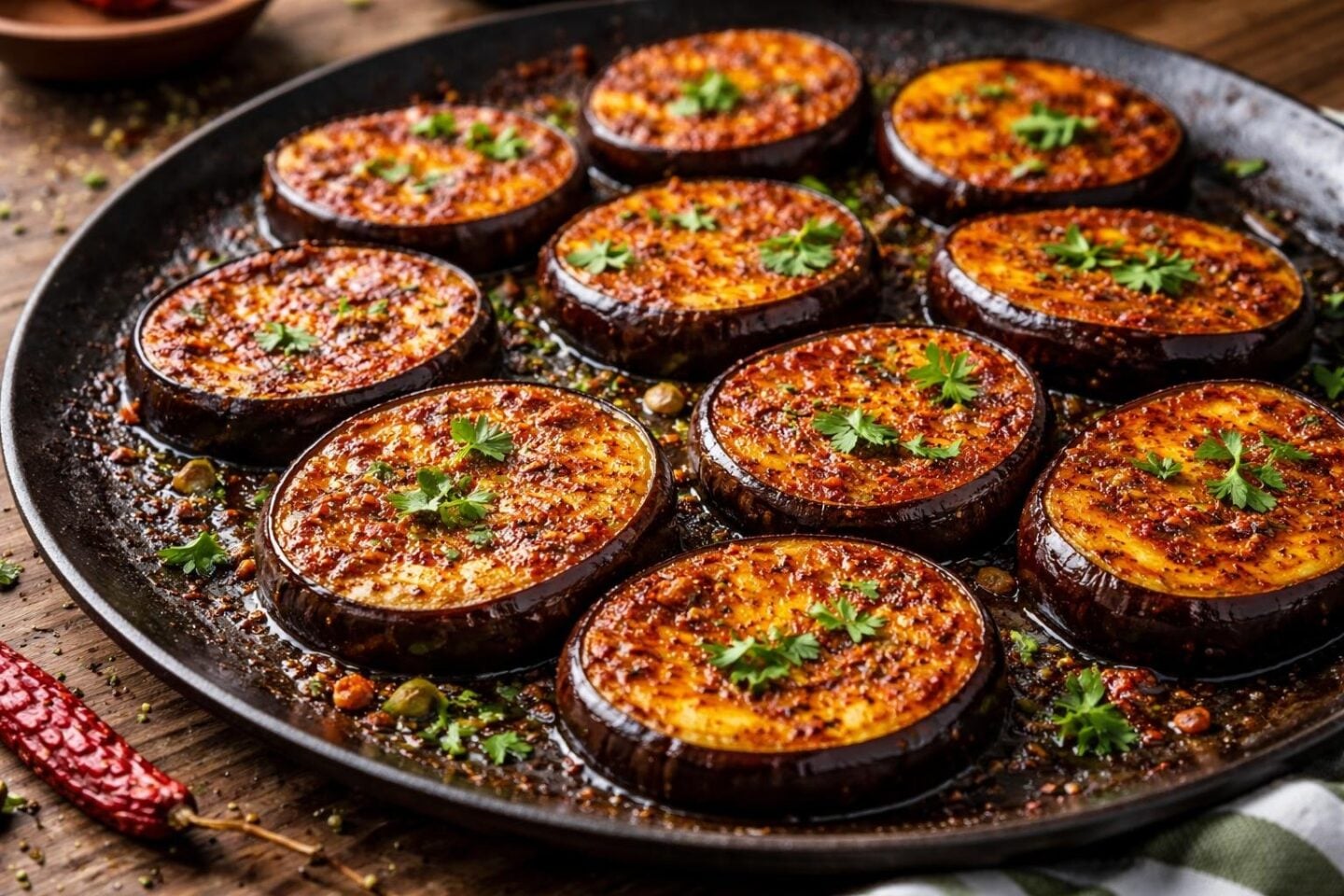
No heavy batter, no breadcrumbs—just turmeric, red chili powder, garam masala, and cumin doing the heavy lifting. As they toast in the oil, the spices form a thin, earthy crust that’s got a hint of smokiness and plenty of warmth.
Getting the texture right? That’s about nailing the slice thickness, mixing up a good spice paste, and keeping your heat steady. If you’re not into frying, you can always bake, air fry, or even microwave these. Stick around for tips on prepping your eggplant, tweaking the spices to your taste, and picking which cooking method fits your style—or your mood.
Table of Contents
So, What Exactly Is Brinjal Tawa Fry?
Brinjal tawa fry is a pan-fried Indian side dish made with sliced brinjal (aubergine or eggplant), tossed in ground spices, and cooked on a hot griddle. This eggplant fry is a popular choice for a quick lunch or dinner side. You fry it just long enough for the outside to crisp up while the inside turns soft and creamy.
What makes it special? That spice crust, the shallow-frying, and the fact that it’s bold and simple all at once—basically, Indian comfort food.
How Brinjal Tawa Fry Comes Together
Start by slicing your brinjal into medium-thick rounds, then slather them in a thick spice paste and shallow-fry on a hot tawa. The usual suspects in the spice mix: turmeric, red chili powder, garam masala, salt, and cumin powder. Some cooks sprinkle a bit of rice flour or semolina for extra crunch, but it’s totally optional.
Unlike battered fried eggplant, there’s no breadcrumbs or thick coating here. The spices toast right in the oil, forming:
- A crispy, spiced outer layer
- A soft, almost buttery center
- Loads of warm, earthy flavor
Medium heat is key—enough to cook the brinjal through, but not so high that you scorch the spices. Always shallow-fried, never deep-fried.
It’s almost always served as a side dish—think sambar rice, rasam, dal, curd rice, or chapati. Not really meant to steal the show as the main course, but it kind of does anyway.
What People Call It Around India
Depending on where you are, you’ll hear different names. In North India, it’s usually baingan fry or baingan tawa fry. Down South, you might hear kathirikai fry (Tamil) or vankaya fry (Telugu).
In Bengal, there’s a similar dish called begun bhaja—it’s basically sliced brinjal fried with spices. The spices may shift a bit, but the method is close enough. Across India, you’ll see it as brinjal fry or eggplant fry, and the style is always about pan-frying with spices.
Quick cheat sheet:
| Name | Region |
|---|---|
| Baingan Fry | North India |
| Kathirikai Fry / Poriyal | Tamil Nadu |
| Vankaya Fry | Andhra Pradesh / Telangana |
| Begun Bhaja | West Bengal |
Whatever you call it, it’s all about those sliced brinjals cooked in oil with spices on a flat pan.
Why It’s Still a Favorite—Old School and New
Brinjal tawa fry is a staple in Indian kitchens—quick, easy, and made with spices you probably already have. It’s just one of those go-to brinjal recipes you make on autopilot. It is a classic aubergine preparation found in many households across the country.
Traditionally, people use a cast-iron tawa, which really gets the edges brown and brings out the flavor. The spices sizzle in the oil, and you get that deep, toasty aroma—so satisfying, honestly.
These days, folks are using ovens and air fryers for a lighter take. You still get the spice coating and creamy center, just with less oil. But the heart of the dish doesn’t change: thick brinjal slices, big, bold spices, and direct heat.
It’s homey, unfussy, and fits right into both traditional meals and modern, busy-night cooking.
What You’ll Need + Easy Swaps
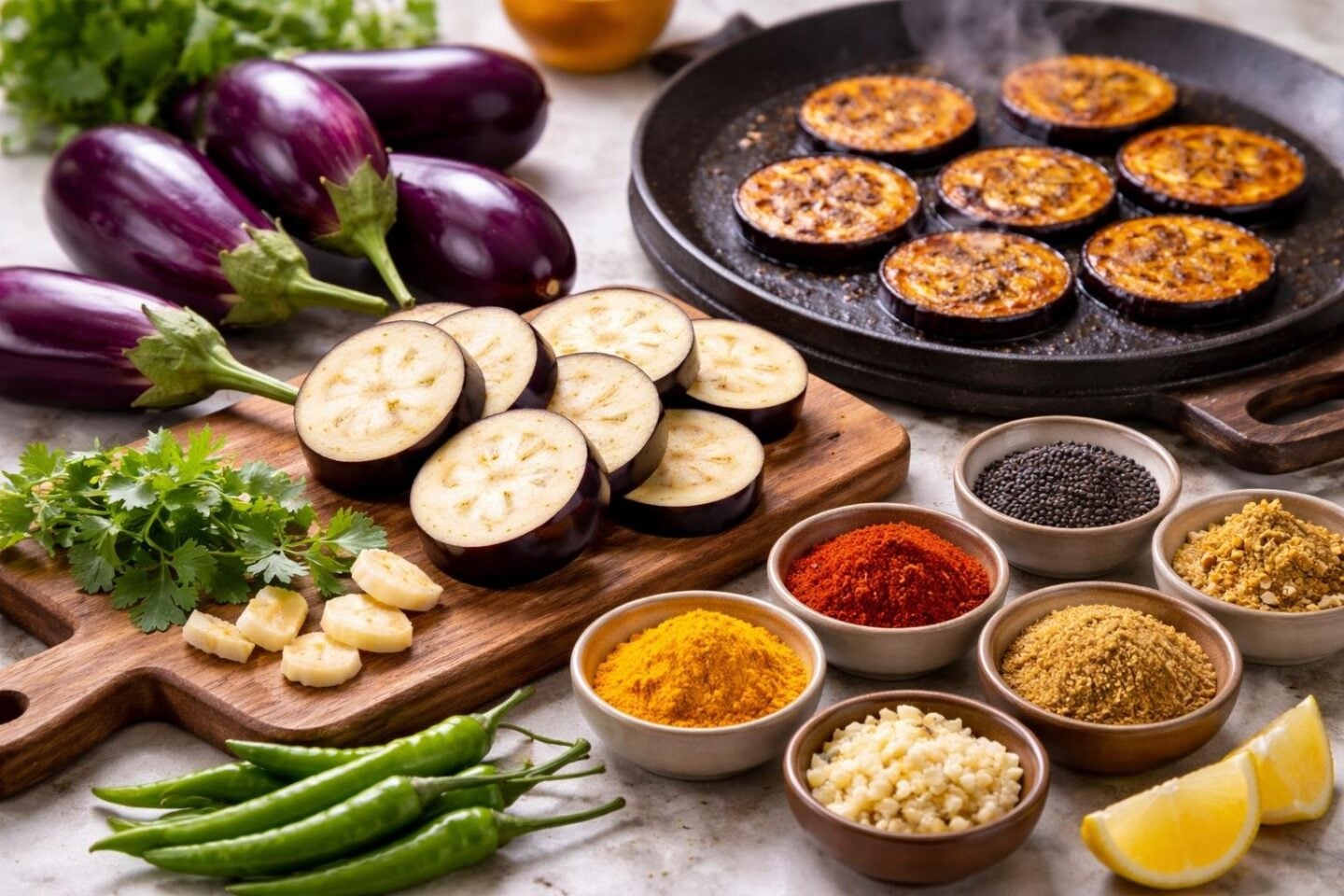
Brinjal tawa fry gets its punch from a handful of spices and a super-thin, crispy coating. The eggplant you pick, your spice blend, and whether you dust on a little flour all make a difference in the final bite. Many brinjal recipes rely on this balance to get the perfect texture.
Here’s the Ingredient Breakdown
You’ll want 2 large brinjals, cut into ½-inch rounds. That’s just thick enough to keep them from falling apart, but thin enough to cook through.
For the spice mix, grab:
- ½ tsp turmeric powder
- 1 tsp red chili powder or Kashmiri chilli powder
- ½ tsp garam masala
- ½ tsp cumin powder (optional, but I’d say go for it)
- ½ tsp coriander powder
- Salt, of course
Turmeric brings that earthy flavor and gorgeous color.
Red chili powder = heat. Kashmiri chili = vibrant color, less burn.
Garam masala adds warmth (think clove, cinnamon, etc.), cumin powder gives a little smokiness, and coriander powder? Just a hint of citrusy freshness.
For crunch, toss in 1–2 tbsp rice flour, sooji (semolina), or gram flour (besan). Just a light dusting—if you go heavy, you lose that classic texture.
Finish with fresh coriander leaves or a squeeze of lemon juice if you’re feeling fancy.
Picking the Best Eggplant (Brinjal)
The best brinjals are firm and shiny, and they should feel heavy for their size. Skip any that look wrinkled or feel squishy.
Big globe eggplants are perfect for round slices. Indian purple brinjals are great too, and they cook a bit quicker.
In the U.S. and can’t find Indian brinjals? No big deal—use:
- Globe eggplant
- Italian eggplant
- Small Japanese eggplant (just slice them lengthwise)
Japanese eggplants have thinner skin and fewer seeds, so they cook fast and get super creamy inside. Using this variety for your brinjal fry recipe ensures a very delicate texture.
Worried about bitterness? Sprinkle the slices with salt and let them sit for 10–15 minutes, then pat dry. This helps, especially with bigger, older eggplants.
Oh, and slice evenly—thin slices burn, thick ones stay raw. It’s a balancing act.
All About the Spices and Coatings
Mix your spices with just a splash of water—enough to make a thick paste. You don’t want it runny.
For heat and color, pick your poison:
- Regular red chili powder for a real kick
- Kashmiri chilli powder if you like it milder but want that deep red color
Add turmeric powder, coriander powder, and cumin powder for balance.
A pinch of amchur powder (dried mango) gives a nice tang, if you have it.
For the coating:
| Ingredient | Texture Result | Best For |
|---|---|---|
| Rice flour | Light, crisp crust | Classic tawa fry |
| Besan (gram flour) | Nutty, slightly thicker layer | Extra spice hold |
| Sooji (semolina) | Extra crunch | Oven or air fryer |
One or two tablespoons is plenty—too much and the dish gets heavy, which is not the vibe.
Want more flavor? Mash in a little fresh garlic to the paste. Why not?
Regional Twists: How People Mix It Up
Down South, cooks sometimes add sambar powder for a deeper, more complex flavor—lots of chili, coriander, and a hint of lentil.
Some dip the slices in thin buttermilk before the besan coating. Adds a subtle tang and helps the spices stick.
In Maharashtra, there’s usually more garam masala and a squeeze of lemon juice at the end.
For a North Indian street-food vibe, sprinkle chaat masala on after frying—salty, tangy, a little spicy. It’s a nice touch.
A pinch of hing (asafoetida) adds a savory, umami kick, but go easy on it.
Whatever the region, the method’s the same: spice, pan, and no heavy batter.
Ingredient Swaps & Substitutions
Can’t find some of the Indian spices in the U.S.? No worries, you can still get close to the real deal.
- Sub Kashmiri chilli powder with mild paprika and a pinch of cayenne.
- No amchur? Just add a squeeze of lemon juice after frying.
- No garam masala? Mix equal parts ground cumin and coriander, then add a pinch of black pepper.
For flour:
- Rice flour is gluten-free and works great.
- No sooji? Fine cornmeal is a decent stand-in.
- Or just skip the flour for a softer, more traditional crust.
Trying different cooking methods?
Oven: Add rice flour or sooji for browning. Bake at 425°F and brush or spray lightly with oil.
Air Fryer: Use besan or rice flour for a firm crust. Spray just a little oil.
Microwave: Skip the flour. Use a thicker spice paste, and if you want some browning, finish under a broiler for a minute or two.
Keep the coating light and the spice mix balanced. That’s the heart of brinjal tawa fry, no matter how you make it.
Getting Eggplants Ready for Tawa Fry
The texture of your brinjal tawa fry? That’s really set before it even hits the pan. Clean, even slices and a well-balanced spice paste will help you get that crispy crust and soft middle—no batter needed. It’s all in the prep, honestly.
Washing & Slicing: What Actually Matters
Grab firm, fresh brinjals—the ones that feel heavy for their size and have smooth, tight skin. If it’s wrinkly, just skip it.
Give them a good rinse and dry them off. Any leftover water will thin out your spice paste and make it harder to get that crunch.
Cut into ½‑inch rounds. Go too thin and they’ll just fall apart when you flip them. Too thick and they won’t cook through. You want that sweet spot, especially if you’re figuring out how to make brinjal tawa fry that isn’t a mess.
Try to keep the slices about the same size. That way, everything cooks at the same pace and you’ll get a nice, even crust—no surprises.
If you’ve got big or older brinjals, sprinkle a little salt on the slices and let them sit for 10–15 minutes. Pat them dry before you marinate; this step helps cut bitterness and pulls out extra moisture.
Handle gently! Raw brinjal is sturdy, but once it starts cooking, it softens up fast.
Soaking & Marinating: Keep It Simple
Don’t bother soaking brinjal in water for ages. The real trick is a thick, spice-packed coating.
In a bowl, mix together:
- ½ tsp turmeric powder
- 1 tsp red chili powder
- ½ tsp garam masala
- ½ tsp cumin powder (optional)
- Salt to taste
- Pinch of hing (optional)
Add just a few drops of water—really, just enough to make a thick paste that actually sticks to the slices.
Coat each piece well, so you get marinated brinjal with a thin masala layer. Properly preparing marinated brinjal ensures that every bite is packed with flavor. This is what forms the crust, which is basically how to make brinjal fry without going the batter route.
If you want it extra crisp, dust on 1–2 tbsp rice flour or semolina. It helps with browning but won’t make it heavy or cakey.
Let them rest for 10–15 minutes. That quick marination really helps the flavor soak in, whether you’re following a brinjal fry recipe or a brinjal tawa fry recipe—honestly, they’re about the same here.
Don’t go overboard with water. Too much and your marinade gets runny, which means soggy, sad brinjal. No thanks.
Top Tips for Tawa-Fried Brinjal
Pick firm brinjals, slice them right, and use a thin, balanced spice paste. When you’re shallow frying, keep an eye on the heat and oil. That’s how you get a crispy outside and a soft, almost creamy inside. Even tiny tweaks—like the coating or pan temperature—make a huge difference in your brinjal roast’s final texture.
Spice Mix & Coating Tricks
Go for medium-thick slices, about ½ inch. Too thin? Mushy. Too thick? Raw in the middle.
Pat those slices dry before you add any spices. If they’re wet, the masala just slides off.
Mix up turmeric, chili powder, garam masala, cumin, and salt. Just a few drops of water—seriously, less is more. You’re aiming for a thick paste, not soup.
Keep the layer thin. This tawa fry recipe is all about the spices, not batter. Coat both sides evenly, but don’t pile it on.
For more crunch, dust with rice flour or semolina. It gives you that delicate crust everyone loves.
Let those slices sit for 10–15 minutes. It’s worth it—the spices stick better and you get better browning.
How to Shallow Fry Without Fuss
Crank your tawa up to medium heat—not high. High heat just scorches the spices before the brinjal cooks through. A good brinjal fry recipe requires patient cooking to avoid burning the delicate spice layer.
Pour in 1–2 tablespoons of oil and spread it out. Lay down the slices in a single layer. Don’t crowd the pan, or you’ll just end up steaming them.
Cook each side for about 3–4 minutes. Flip gently; brinjal gets fragile as it cooks.
Here’s a quick cheat sheet:
- Medium heat = even cooking
- Single layer = better browning
- Gentle flipping = slices stay whole
- Minimal oil = crispy, not greasy
The spices toast right in the oil, making a thin, tasty crust while the inside goes all creamy. That contrast? It’s what makes a good brinjal roast.
Cooking a big batch? Fry in rounds. Don’t stack slices or you’ll lose that crisp.
Picking the Right Pan & Handling Heat
An iron tawa brings out deeper flavors and gives you a darker, more caramelized crust. It holds heat nicely, too.
But hey, a non-stick pan works if you’re just starting out. You’ll use less oil and have fewer sticking issues, which is always nice.
Keep the flame at medium or medium-low. If you see smoke or the spices darken too fast, turn the heat down.
Try not to flip too much. Let one side get golden before turning it over.
After frying, let the slices rest for 3–5 minutes. The crust sets up a bit more as it cools—trust me, it’s worth the wait.
Honestly, good pan control is what takes your tawa fry recipe from “just okay” to “wow, I need seconds.”
Easy Ways to Boost Flavor & Texture
The final texture of your brinjal tawa fry depends on how thick you slice, how hot your pan is, and how much oil you use. Tiny tweaks in prep and cooking can mean the difference between crispy brinjal with a soft center or just soggy slices. Nobody wants the latter.
Finding That Crisp-Soft Balance
Slice brinjal into half-inch rounds. Too thin? Mush. Too thick? Undercooked. Pat them dry so the spice paste actually sticks.
Use only a few drops of water to make your spice paste thick. Too much water means no crust. If you’re chasing that classic brinjal roast vibe, dust the slices with rice flour or semolina. It gives you a thin outer layer but doesn’t turn it into a battered fry.
Cook on medium heat. High heat burns the spices before the inside softens up. Low heat? The slices just soak up oil and lose their crunch.
Lay the slices out in a single layer. Flip after 3–4 minutes per side, and let them rest for a few minutes after cooking. The crust gets a little firmer as it cools off.
Keeping Oil in Check
Brinjal loves to soak up oil, so measure it out. Use 2–3 tablespoons total for a regular batch. Spread it evenly on the tawa—don’t just pour it over the slices.
Don’t crowd the pan. Too many slices trap steam, and then you’ll need more oil to crisp things up. Steam ruins the crust, honestly.
If you’re using big, mature brinjals, salt the slices and let them rest for 10 minutes. Pat dry before coating. This pulls out moisture so your brinjal doesn’t drink up extra oil when frying.
Flip only once or twice. If you flip too much, you’ll break the crust and let oil seep in.
If you want to use less oil but still want that crispy brinjal, cook a little longer on medium heat—don’t just add more oil. Patience pays off here.
More Ways to Cook Brinjal Tawa Fry
No tawa? No problem. You can still get that spice-crusted outside and soft inside—just control the heat, keep your marinade thick, and cook the slices in a single layer. The rest is easy.
Oven-Baked Brinjal Tawa Fry
If you’re making a big batch, the oven’s your friend. It gives you even heat and steady browning—super handy.
Preheat the oven to 425°F (220°C). Line a tray with parchment or use a wire rack for better air flow.
Lay out your spice-coated brinjal slices in a single layer. Brush or spray both sides with oil. Don’t stack or overlap—seriously, they need space.
Bake for 20–25 minutes, flipping halfway. Want more browning? Broil for 1–2 minutes at the end. This oven method is a great alternative to a standard eggplant fry if you are cooking for a crowd.
What you’ll get:
- Lightly crisp outside
- Soft, creamy inside
- Not quite as crunchy as pan-fried, but still tasty
Mix in 1–2 tablespoons rice flour or semolina for extra crisp. Keep that spice paste thick—runny paste just makes soggy brinjal.
Microwave Brinjal Tawa Fry
Need something quick and don’t care about crisp? The microwave’s your shortcut. Just know it won’t give you a crunchy crust.
Lay marinated slices in a single layer on a microwave-safe plate. Drizzle 1–2 teaspoons oil over them. Cover loosely so you don’t get a mess.
Cook on HIGH for 4–6 minutes, flipping halfway. Check for doneness—the slices should be soft, not watery.
What to expect:
- Very soft texture
- Moist and cooked through
- No crispy edges, sorry
Want a little more texture? Pop them under a hot broiler for 1–2 minutes or quickly sear in a hot pan after microwaving. Always keep the spice paste thick—too much water makes everything mushy.
Air Fryer Brinjal Tawa Fry
Air frying is a game-changer if you want crisp with less oil, especially for small batches.
Preheat your air fryer to 375–380°F (190°C) and give the basket a quick spray with oil.
Arrange slices in a single layer, spray the tops, and cook for 12–15 minutes, flipping halfway. For darker edges, add 2–3 more minutes.
What you get:
- Crispy edges
- Nicely toasted spice crust
- Creamy in the middle
Don’t crowd the basket—hot air needs to move around each slice. If you want a firmer crust, add rice flour or semolina to your marinade.
Fun Ways to Serve Brinjal Tawa Fry
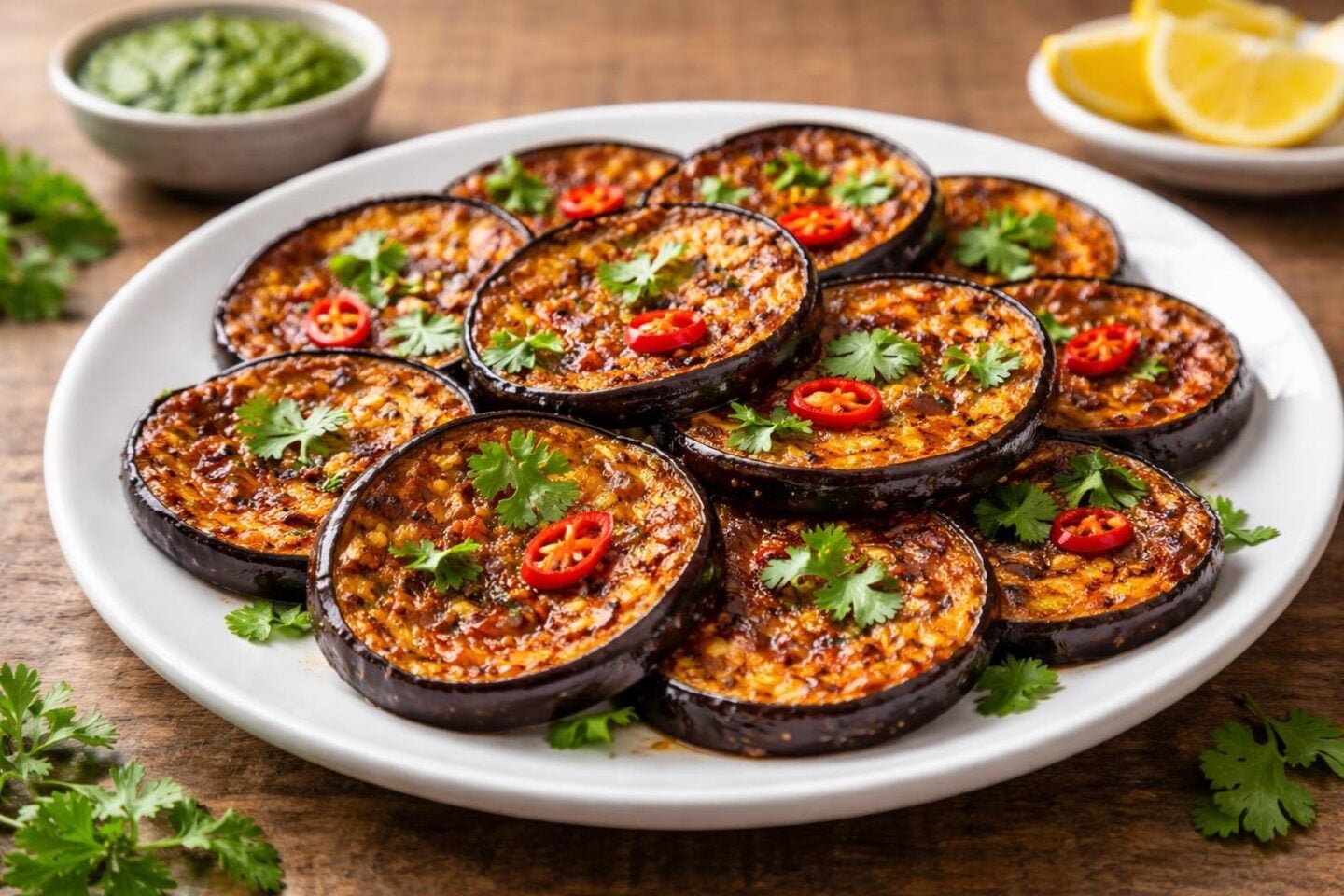
Honestly, brinjal tawa fry is at its best when it’s hot off the pan—crispy on the outside, soft and a little creamy inside. If you want that spice crust to stay crunchy, don’t let it sit around too long. It’s one of those dishes that loves simple sides and fresh garnishes, especially if you’re looking to balance that earthy, warm flavor it brings.
What Goes Well With Brinjal Tawa Fry?
If you ask me, the classic move is to serve brinjal fry with plain rice and something like a light lentil curry. It just works—dal rice is mellow enough to let the spices shine without stealing the show.
Another good one? Sambar rice. The tang from tamarind and the soft lentils play off that smoky, spiced crust. Just keep your sambar on the thinner side so it doesn’t drown out the brinjal.
If you’re in the mood for something lighter, try it with rasam and steamed rice. Rasam’s peppery, tomato-y kick kind of resets your palate after every bite of fry—super refreshing.
On days when you want to cool things down, curd rice is your friend. The yogurt calms the heat from all that chili and garam masala, making for a pretty soothing combo.
And if you’re in the U.S., here are some easy pairings:
- Steamed basmati rice
- Warm naan or even whole-wheat tortillas (why not?)
- A simple yellow lentil soup
For drinks, I’d keep it simple and gentle:
- Salted buttermilk
- Plain yogurt lassi
- A light lager or sparkling water with a twist of lemon
Honestly, bold drinks just fight with the spices, so keep it mellow.
Classic Sides from Different Regions
In South India, you’ll see brinjal tawa fry as part of a thali—just a little bit on the side, nestled in with rice, sambar, rasam, a veggie poriyal, and curd. It’s all about variety and balance.
If you’re after a comforting, home-style dinner, pair it with chapati and dal. The flatbread is perfect for scooping up those creamy slices without them falling apart.
Want to make things a bit more interesting? Throw in:
- Lemon pickle
- Coconut chutney
- A small cup of plain yogurt
Just don’t go overboard with the rest of the meal—the fry already packs a punch with turmeric, chili, and garam masala.
And if you’re cooking for friends in the States, try serving it as a warm side with grilled chicken, some simple baked fish, or even these spiced chickpeas. That shallow-fried texture fits right in with roasted or grilled mains.
Little Touches and Garnishes
Fresh chopped coriander is a must—just sprinkle it on right before serving for a pop of color and a gentle herbal note.
A squeeze of lemon juice brightens things up, especially if you’re eating it with dal rice or chapati. I’m a fan, but hey, taste and see what you like.
If you want a little more texture or zing, dust on a bit of:
- Chaat masala
- Freshly cracked black pepper
And if you love garlic, go ahead and mash a bit into the marinade before cooking. It won’t take over, but it does add a nice depth.
Oh, and one last thing—serve the slices in a single layer on a flat plate. Don’t stack them, or you’ll lose that lovely crispiness you worked so hard for.
Your Brinjal Tawa Fry Questions, Answered
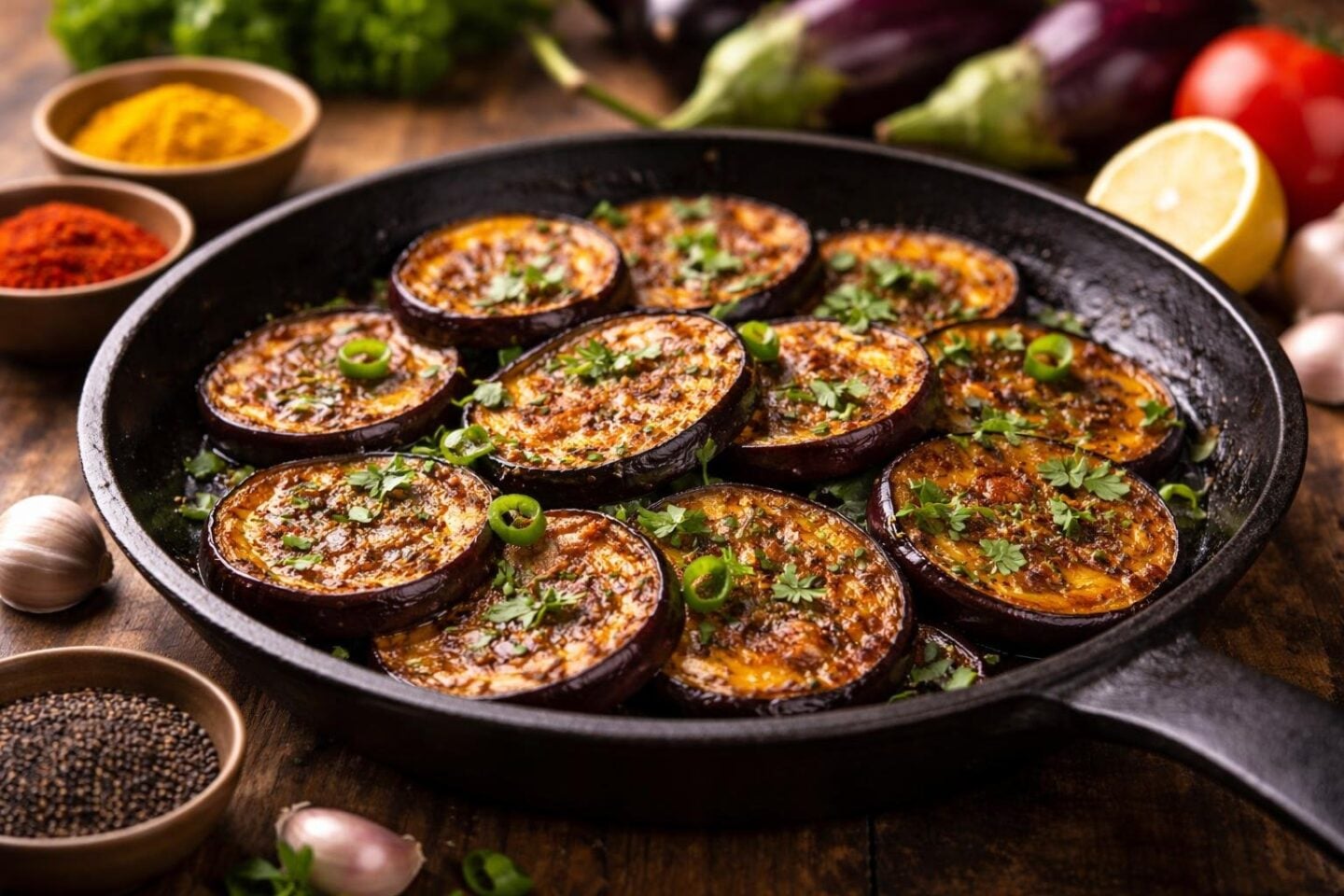
Brinjal tawa fry is all about picking the right eggplant, getting your spices just right, and not rushing the cooking. If you slice, season, and cook with a bit of patience, you’ll nail that crisp crust and soft center—no batter needed, just simple goodness.
Which Eggplants Work Best for Tawa Fry?
Honestly, you’ve got options. Large globe eggplants are great—just slice them into half-inch rounds. If you can find smaller Indian brinjals, even better. They usually have fewer seeds and cook up creamy inside.
The main thing? Make sure they’re fresh, firm, and shiny. No soft spots or wrinkles. Fresher brinjals hold their shape and soak up those spices beautifully. Most brinjal recipes work best when the vegetable is at its peak freshness.
How Do You Prep Eggplants to Avoid Bitterness?
Give the brinjals a good wash and slice them—not too thin, or they’ll fall apart. Somewhere in the medium-thick range works best.
Pat the slices dry. If you’re using bigger, older brinjals, sprinkle them with a bit of salt and let them sit for 10-15 minutes. This draws out any bitterness and extra water. Just wipe off the moisture before you add your spice paste.
Which Spices Should I Use for Tawa Fry?
This is where the magic happens. You’ll want turmeric, red chili powder, garam masala, salt, and maybe a pinch of cumin powder or asafoetida if you’re feeling adventurous.
Turmeric brings that earthy base, red chili gives heat and color, and garam masala adds warmth—think clove and cinnamon. Cumin? It’s got a mild smokiness. Some folks mix the spices with a splash of water to make a thick paste. For a crisper crust, dust with a little rice flour or semolina before frying.
How Do I Get Evenly Cooked, Crispy Slices?
Keep your tawa or pan at medium heat—too hot and the spices burn, too low and you’ll get soggy slices. Spread a couple tablespoons of oil across the surface before adding the brinjal.
Lay the slices in a single layer. Don’t crowd the pan. Give each side about 3–4 minutes, flipping gently when the bottom is golden brown.
Steady heat is key. That way, the outside crisps up while the inside turns soft and creamy.
Can I Make Brinjal Tawa Fry with Less Oil?
Absolutely! You can try baking, air frying, or even microwaving—though the texture changes a bit.
For the oven, preheat to 425°F (220°C), arrange slices on a lined tray, brush with a little oil, and bake 20–25 minutes. Flip halfway, and if you want extra browning, broil for a minute or two at the end.
Air fryer? Preheat to 375–380°F (190°C), spray the basket, and cook the slices in one layer for 12–15 minutes, flipping once.
For a super low-oil version, microwave the slices for 4–6 minutes, flipping halfway. They’ll be soft but not crisp—if you want a bit more texture, a quick sear or broil after microwaving does the trick.
What goes well with brinjal tawa fry? Which sauces, sides & tasty extras?
Honestly, brinjal tawa fry is great with sambar rice, rasam rice, dal, or even just some curd rice. If you’re in the mood for something simple, it’s awesome with chapati too—nothing fancy, just good comfort food.
On a South Indian thali, this dish totally holds its own as a side. Want to jazz it up a bit? Try a squeeze of lemon or a sprinkle of chaat masala right before serving—seriously, that little kick makes a difference.
If you’re into fresh flavors, a handful of chopped coriander on top never hurts. Give it a try and see what works for you!
Leave a Reply