
If you know the warm, savory flavor of West African peanut stew, imagine that same groundnut richness captured in a thick, spoonable sauce you can toss with grains, spread over grilled chicken, or drizzle on roasted sweet potatoes. That is essentially what West African Peanut Herb Pesto is: a fresh, uncooked condiment that blends roasted peanuts with cilantro, parsley, garlic, ginger, and a touch of heat into something you can make in minutes and use all week long.
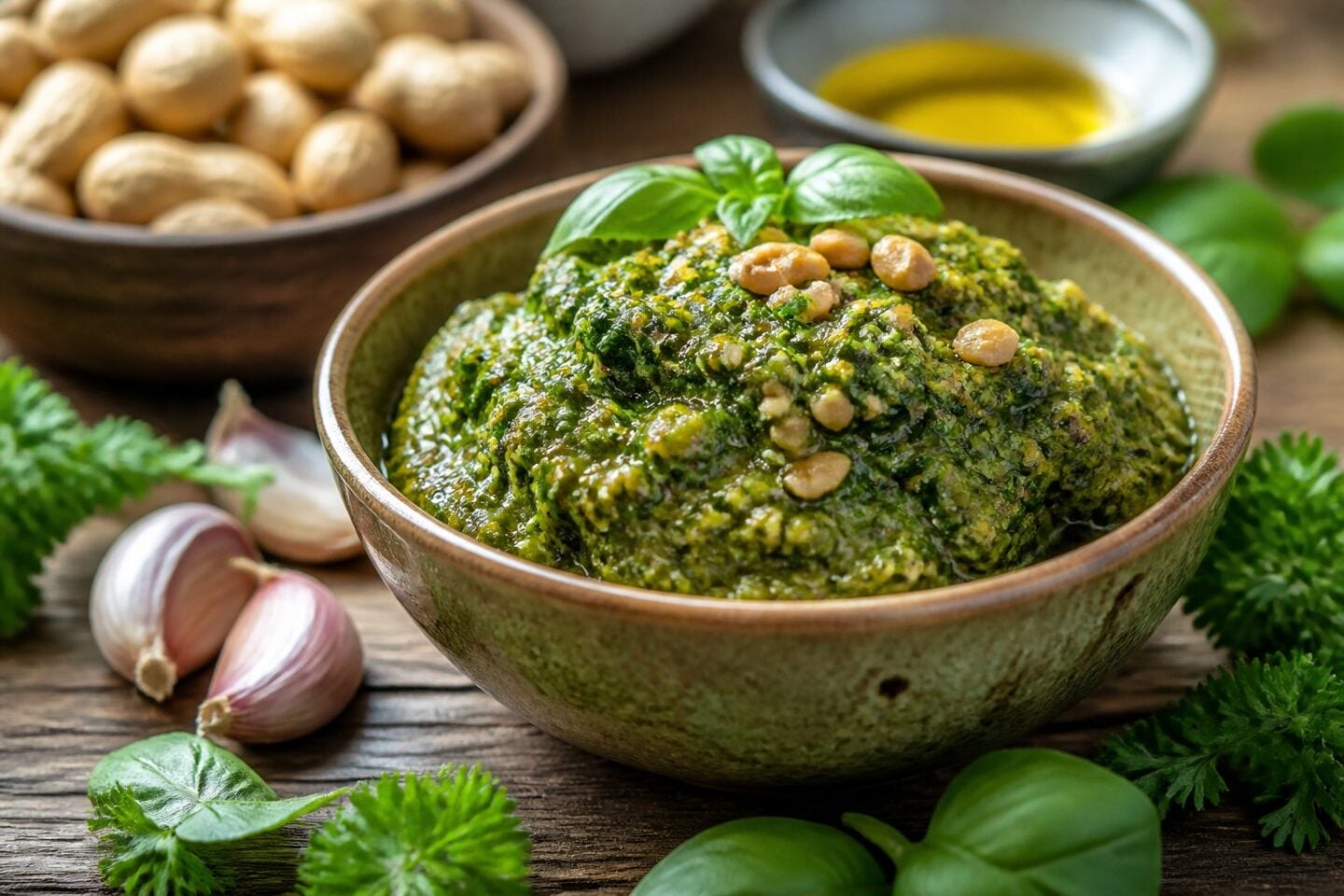
This sauce takes the flavor logic of West African cuisine, where groundnuts, fresh herbs, and bold aromatics have been pounded together for generations, and puts it into a quick, modern format that works with everyday meals. It is not an Italian pesto with peanuts swapped in. It is built from a different culinary tradition entirely, one where the combination of roasted nuts, raw herbs, citrus, and chile makes perfect sense on its own terms.
The recipe below gives you exact measurements, clear texture cues, and practical guidance on ingredient choices, storage, and serving ideas. Whether you are looking for a weeknight shortcut or a new condiment to keep in rotation, this pesto earns its place in your fridge. The rest of the article walks you through how it connects to the broader traditions of African cuisine, how to adjust it to your taste, and the best ways to put it to work.
Table of Contents
What This Sauce Is
West African Peanut Herb Pesto is a raw, blended condiment built around roasted peanuts, fresh herbs, garlic, ginger, chile, and oil. It borrows its format from the idea of pesto, a thick sauce you pulse in a blender or food processor, but its flavors come directly from the same pantry that produces dishes like peanut stew, groundnut stew, and Maafe across West Africa.
How It Differs From Italian Pesto
Italian basil pesto relies on pine nuts, Parmesan, garlic, basil, and olive oil. The cheese and pine nuts give it a mild, creamy quality. West African Peanut Herb Pesto skips the cheese entirely and uses roasted peanuts as its base nut, which creates a deeper, more savory profile. It also adds fresh ginger and chile, ingredients that would be unusual in a Genovese pesto but are central to West African cooking.
The herb blend is different too. Instead of basil alone, you use cilantro and flat-leaf parsley, sometimes with a small amount of mint. The result tastes earthier, warmer, and more aromatic than its Italian counterpart.
Flavor, Texture, And Heat Level
Expect a thick, slightly coarse paste with a nutty base, bright herbal notes, and a slow-building warmth from fresh chile. The flavor is savory first, with the roasted peanuts providing a toasty richness. Citrus juice cuts through that richness and keeps the sauce from feeling heavy.
The heat level is moderate by default. One small fresh chile, like a serrano or bird's eye, gives a noticeable but manageable kick. You control it by seeding the chile or using less.
Why The Peanut-Herb Combination Works
Peanuts have a natural fattiness and mild sweetness that softens the sharpness of raw garlic and ginger. The herbs add freshness and color, preventing the sauce from tasting like straight peanut butter. Together, they create a balanced condiment that works as both a marinade and a finishing sauce. This is the same principle behind African peanut stew and West African peanut stew, where groundnuts meld with aromatics to build layered, satisfying flavor without needing dairy or heavy thickeners.
How It Connects To Regional Food Traditions
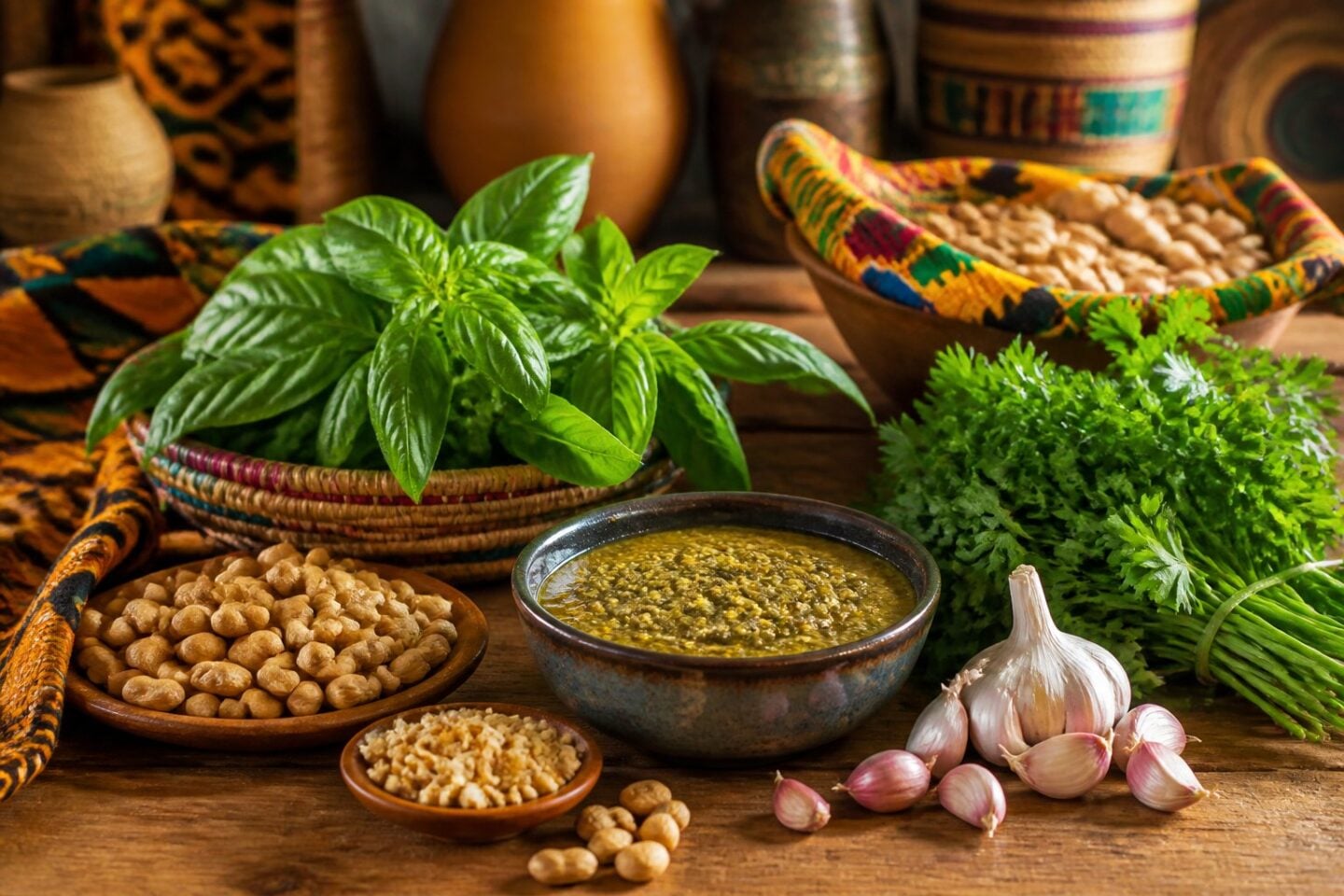
The flavors in this pesto are not invented. They come from a long cooking tradition across West African cuisine where groundnuts, fresh herbs, and pounded aromatics form the backbone of sauces, stews, and marinades. Turning those flavors into a raw, spoonable condiment is a small format shift, not a flavor leap.
The Mortar-And-Pestle Tradition
Across much of West Africa, sauces begin in a mortar and pestle. Cooks pound raw garlic, ginger, fresh chiles, and sometimes leafy herbs into a rough paste before adding it to soups, stews, or grilled meats. This technique predates the food processor by centuries. When you blend peanuts and herbs into a pesto, you are essentially following the same process with a modern tool.
Groundnut stew, for example, starts with a pounded or blended base of onion, garlic, ginger, and tomato before peanut paste is stirred in. The pesto version just stops before the cooking step, keeping everything raw and fresh.
How Groundnuts Reached West Africa
Peanuts, also called groundnuts, originated in South America and arrived in West Africa through Portuguese traders in the 1500s. They adapted so well to the climate and soil that they became one of the region's most important crops within a few generations. Today, countries like Nigeria and Senegal are among the world's largest peanut producers.
Groundnuts became woven into the fabric of African cuisine, appearing in soups, stews, snacks, and sauces. Their versatility made them a symbol of food security and everyday nourishment across the region.
Why A Pesto-Style Format Makes Sense Here
The leap from pounded groundnut sauce to pesto-style condiment is shorter than it might seem. Both formats involve crushing nuts with aromatics and oil into a thick, spreadable paste. The main difference is that a pesto stays raw, preserving the bright green color and fresh bite of the herbs. For cooks familiar with West African cuisine who want a quicker, no-cook option, this format fits naturally into existing flavor traditions without forcing anything unfamiliar.
Choosing The Right Ingredients
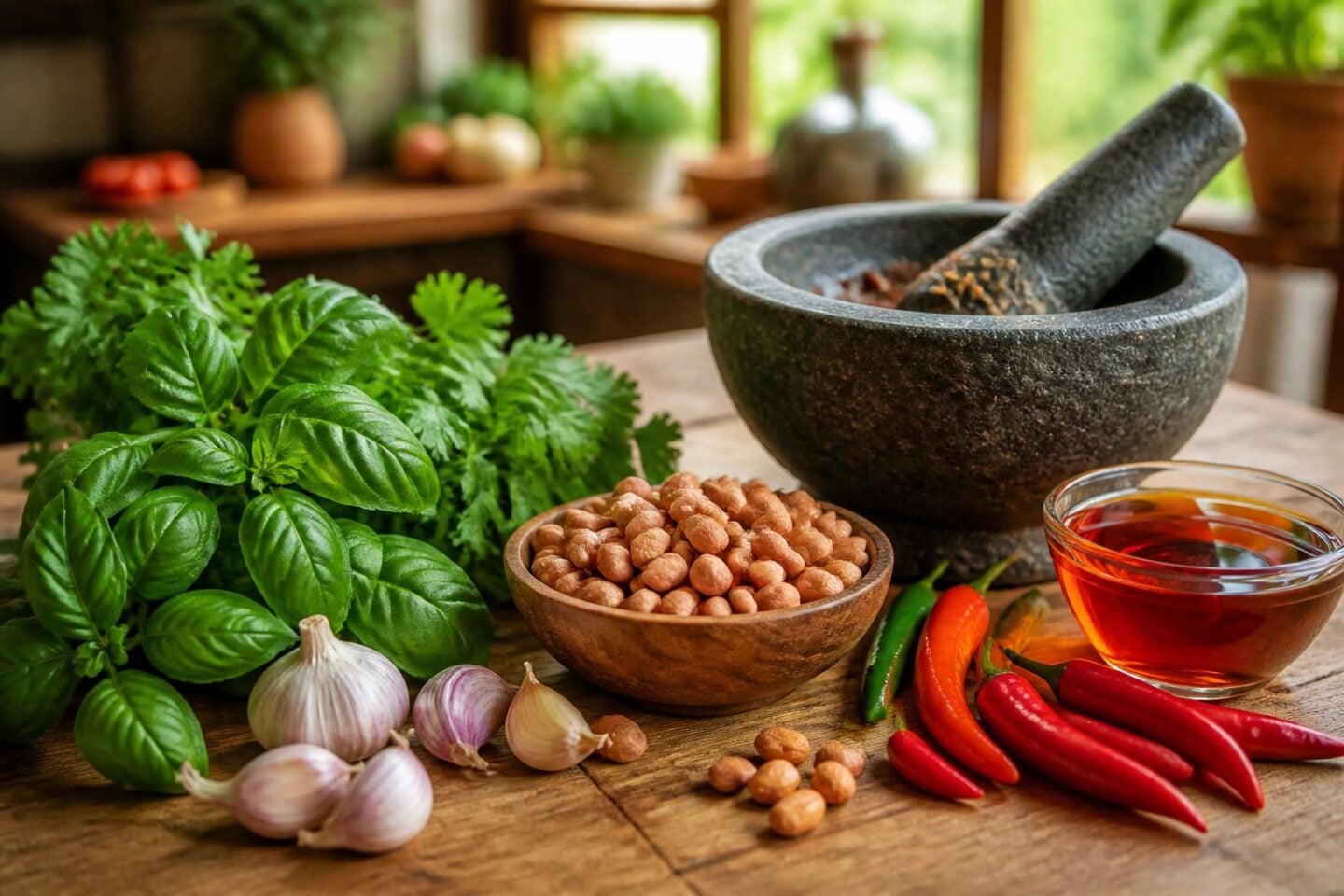
Ingredient quality matters more in a raw sauce than in a cooked one because nothing gets softened or mellowed by heat. The peanuts, herbs, and aromatics you choose will directly shape the final flavor, so it pays to be specific. A pinch of ground coriander and the right oil can make the difference between a flat pesto and one that tastes alive.
Best Herbs, Peanuts, And Oil
Use a mix of fresh cilantro and flat-leaf parsley in roughly equal parts. Cilantro brings brightness and a slightly citrusy edge. Parsley adds a clean, grassy note that keeps the sauce from tasting one-dimensional. Include the tender stems of both herbs; they blend smoothly and carry plenty of flavor.
For peanuts, dry-roasted and unsalted is the way to go. They have a deeper, toastier flavor than raw peanuts and blend more easily. Avoid honey-roasted or flavored varieties. If you prefer natural peanut butter as a shortcut, choose one with no added sugar or oil.
For the oil, a neutral option like peanut oil or sunflower oil lets the other flavors come through. Extra virgin olive oil works but adds its own fruity flavor, which shifts the profile slightly toward Mediterranean.
Fresh Chiles, Garlic, And Ginger
One serrano or bird's eye chile gives you a clean, direct heat without overwhelming the herbs. Remove the seeds and white ribs if you want less intensity. Two medium garlic cloves are enough; raw garlic in a blended sauce can turn sharp fast, so start small and taste.
Fresh ginger is essential, not optional. About a one-inch piece, peeled and roughly chopped, adds a warm, slightly peppery quality that ties the peanuts and herbs together. Dried ginger is not a substitute here because it lacks the brightness of the fresh root.
Lemon Vs. Lime
Both work, and the choice depends on what you are serving the pesto with. Lime has a sharper, more tropical acidity that pairs well with grilled meats, plantains, and rice dishes. Lemon is softer and rounder, better for fish or roasted vegetables. Use about one tablespoon of juice either way, then adjust after blending.
RECIPE: West African Peanut Herb Pesto
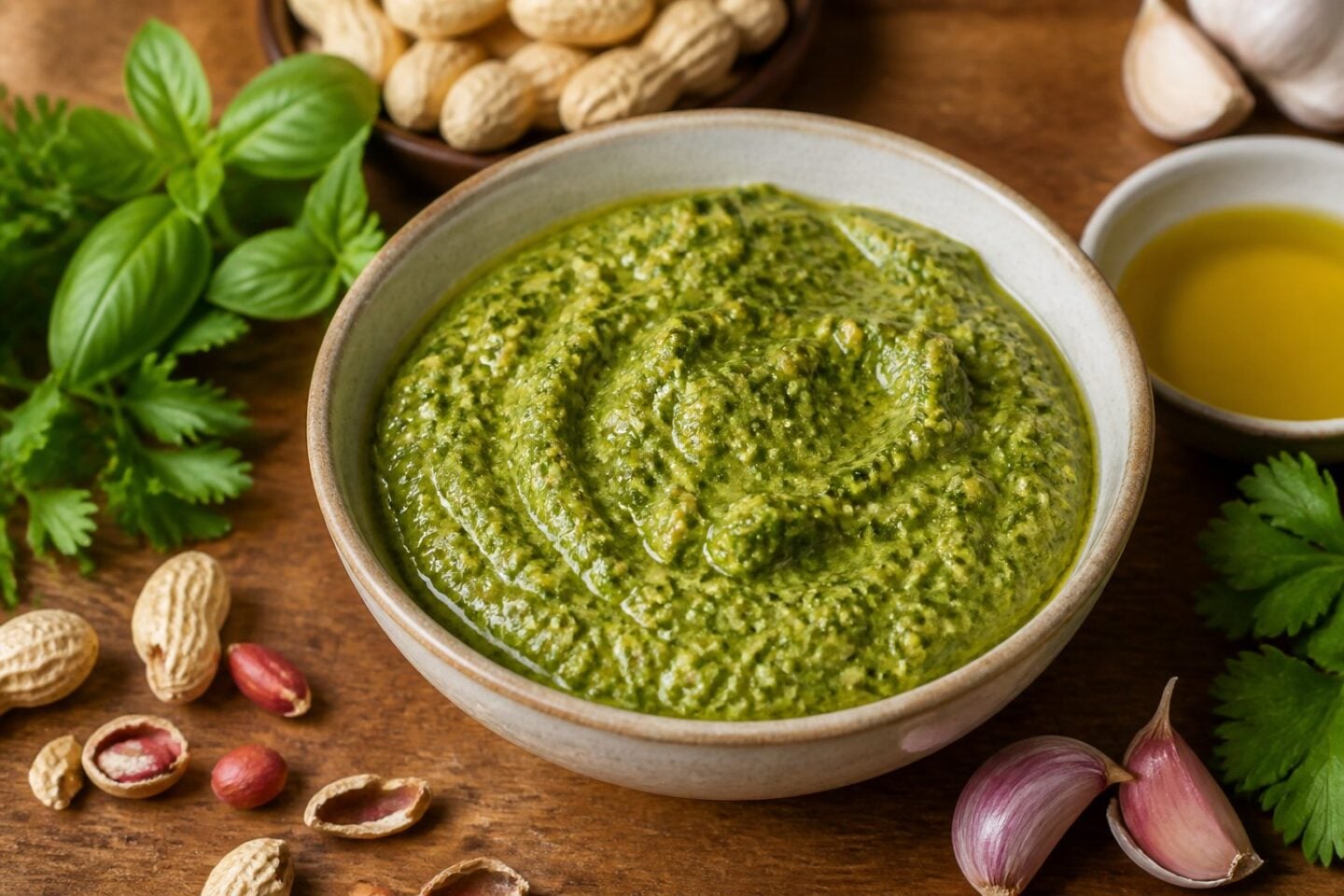
This recipe comes together in about ten minutes with a food processor or blender. The result is a thick, vibrant green sauce with a roasted peanut backbone, fresh herb brightness, and enough warmth to keep things interesting. You can use natural peanut butter if you do not have whole roasted peanuts on hand.
Yield: About 1 cup
Prep Time: 10 minutes
Texture: Thick and spoonable with a slightly coarse grain, similar to a chunky pesto. It should hold its shape on a spoon without running off.
Ingredients
- 1 cup dry-roasted unsalted peanuts (or ½ cup natural peanut butter)
- 1 cup packed fresh cilantro, leaves and tender stems
- 1 cup packed fresh flat-leaf parsley, leaves and tender stems
- 2 medium garlic cloves, roughly chopped
- 1 inch fresh ginger, peeled and roughly chopped
- 1 small serrano or bird's eye chile, seeded for less heat
- 1 tablespoon fresh lime juice (or lemon juice)
- ¼ cup peanut oil or sunflower oil
- ½ teaspoon ground cumin
- ¼ teaspoon ground coriander
- ¼ teaspoon smoked paprika
- ½ teaspoon fine sea salt
- 2 to 3 tablespoons water, as needed
Instructions
- Add the peanuts to your food processor and pulse 8 to 10 times until they break down into a coarse meal. Do not over-process; you want some texture remaining.
- Add the cilantro, parsley, garlic, ginger, and chile. Pulse 5 to 6 times until the herbs are roughly chopped and mixed into the peanut meal.
- Add the lime juice, oil, ground cumin, ground coriander, smoked paprika, and salt.
- Process continuously for 20 to 30 seconds, scraping down the sides halfway through. The mixture should look like a thick, slightly coarse paste.
- Check the consistency. If the pesto is too thick to spread or spoon easily, add water one tablespoon at a time and pulse briefly until you reach a spoonable texture.
- Taste and adjust. Add more salt, lime juice, or a pinch of chile if needed.
- Transfer to a clean jar and press a thin layer of oil over the surface to prevent browning. Seal and refrigerate until ready to use.
Texture Fixes And Flavor Adjustments
Because this is a raw sauce, small shifts in technique or proportion can change the outcome quickly. The three things most likely to need adjusting are thickness, salt balance, and heat. A little ground cumin, a squeeze of citrus, or a splash of water can bring everything back into line.
How To Keep It Spoonable, Not Runny
The ideal texture sits between a thick spread and a pourable sauce. You want it to hold on a spoon but move easily when you drag a fork through it. If your pesto turns out too thick and pasty, add water one tablespoon at a time and pulse briefly. Do not add more oil to thin it, as that will make it greasy rather than loose.
If the pesto is too runny, pulse in an extra tablespoon of roasted peanuts or a small handful of parsley. Both will absorb moisture and add body without changing the flavor profile too much.
Balancing Salt, Acid, And Heat
Taste the pesto right after blending. If it tastes flat, it almost always needs more salt or more acid, not more spice. Add salt in small pinches and lime juice in half-teaspoon increments, tasting between each addition.
For heat, a pinch of ground cumin or smoked paprika can deepen the warmth without making the sauce hotter. If you want more actual chile burn, add a few seeds from the serrano back in and pulse once or twice.
A tiny pinch of ground coriander rounds out the spice blend if the pesto tastes too sharp or one-note.
What To Do If It Tastes Bitter Or Flat
Bitterness usually comes from over-processing the herb stems or from using old, stale peanuts. If you catch bitterness, stir in a half teaspoon of honey or a pinch of sugar. This will not make the pesto sweet; it just takes the edge off.
Flatness is different. It means the sauce needs contrast. Add a squeeze of fresh lime, a touch more salt, or both. These two ingredients do the most to wake up a dull-tasting pesto.
Variations And Substitutions
The base recipe is a starting point. Once you understand how the flavors work together, you can shift the pesto to match your pantry, your heat tolerance, or the dish you are serving it with.
Using Peanut Butter Instead Of Whole Peanuts
Natural peanut butter, the kind with just peanuts and maybe salt, works as a direct swap. Use ½ cup in place of 1 cup of whole roasted peanuts. The texture will be smoother and creamier, more like a sauce than a coarse paste. You may need a little less oil since the peanut butter already contains some fat.
Avoid commercial peanut butters with added sugar, palm oil, or hydrogenated oils. They change the flavor and make the pesto overly sweet.
Milder Versions For Less Heat
If you are cooking for kids or anyone sensitive to spice, skip the fresh chile entirely. The ground cumin and smoked paprika still give the pesto warmth and depth without any burn. You can also stir in a tablespoon of plain yogurt or coconut cream to mellow the flavor further.
For a middle-ground option, use half a jalapeño instead of a serrano. Jalapeños are milder and slightly sweeter, which softens the heat without removing it.
Greener, Thicker, Or Looser Styles
Want a brighter green sauce? Increase the herbs to 1 ½ cups each and reduce the peanuts to ¾ cup. This shifts the balance toward a more herbaceous, lighter-bodied pesto.
For a thicker spread, use more peanuts and less water. This version works well smeared on flatbread or used as a dip for raw vegetables.
For a looser, drizzleable consistency, blend in extra water or oil until it pours from a spoon. This style is best for drizzling over bowls, grains, or grilled proteins.
How To Use It In Everyday Cooking
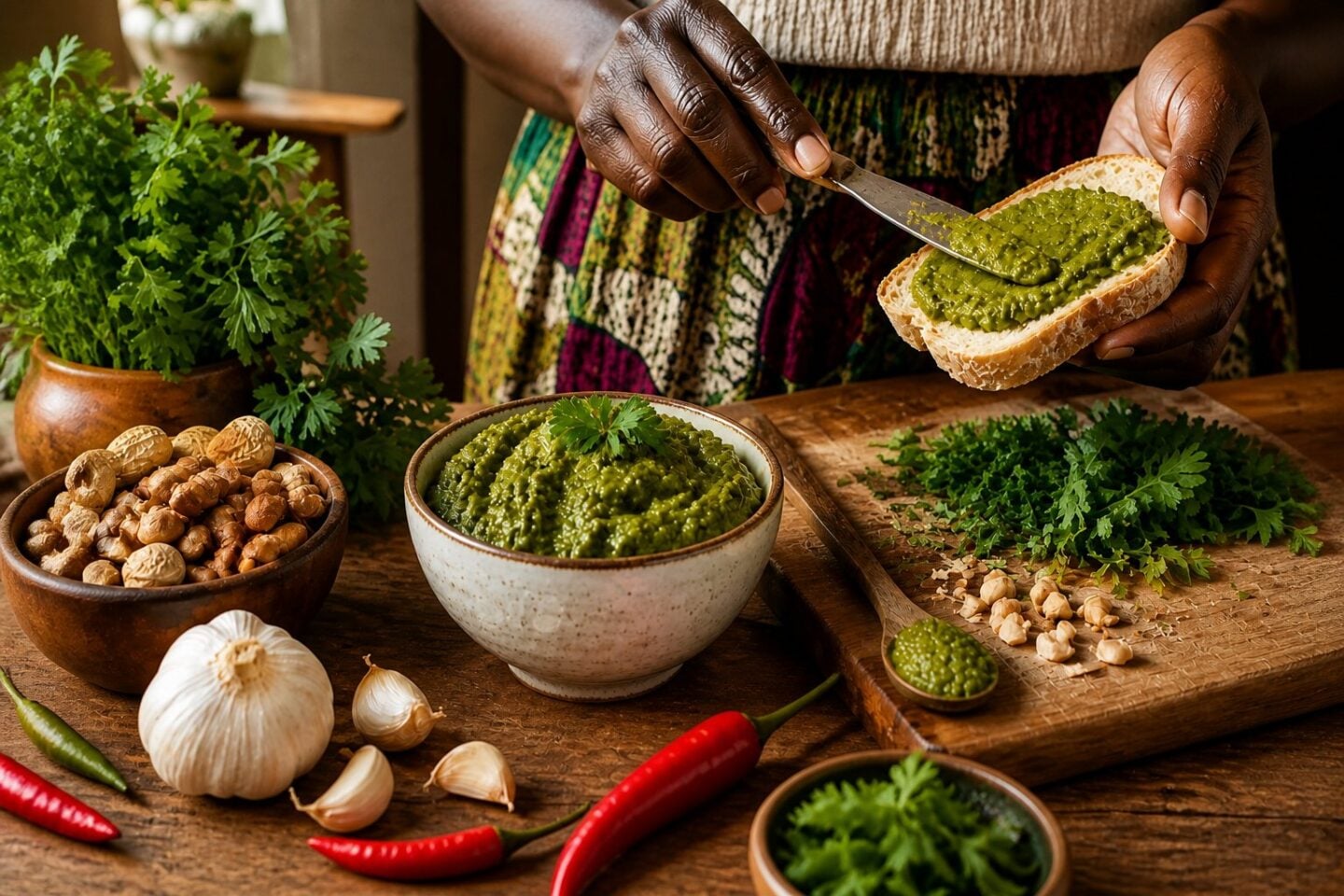
This pesto works anywhere you would use a marinade, a finishing sauce, or a flavor-packed condiment. It has enough body to cling to proteins and enough brightness to cut through rich, starchy sides. Think of it as a shortcut to the layered flavor you find in a good peanut stew recipe, without the long simmer.
As A Marinade For Chicken, Fish, Or Beef
Spread two to three tablespoons of the pesto over chicken thighs, fish fillets, or flank steak and let it sit for at least 30 minutes before grilling or roasting. The peanut oil helps the surface brown nicely, and the garlic and ginger infuse the protein with flavor as it cooks.
For chicken, bone-in thighs work best because they stay moist under the thick coating. For fish, firm varieties like salmon, mahi-mahi, or tilapia hold up well. Apply the pesto right before baking to avoid over-marinating delicate fillets.
With Rice, Grains, And Jollof
Stir a generous spoonful into plain white rice, couscous, or farro for an instant flavor upgrade. The pesto coats each grain and adds richness without needing a separate sauce.
It also makes a great finishing touch on jollof rice. Add a small dollop on top of each serving rather than mixing it in. This keeps the jollof flavor intact while adding a fresh, herbal contrast.
With Plantains And Roasted Sweet Potatoes
Ripe fried plantains and roasted sweet potatoes both have a natural sweetness that pairs well with the savory, slightly spicy pesto. Drizzle the pesto over a plate of sweet potato wedges straight from the oven, or serve it alongside fried plantain slices as a dipping sauce.
For a simple weeknight bowl, combine roasted sweet potatoes, sautéed greens, a scoop of rice, and a generous spoonful of pesto. It comes together in under 30 minutes and covers all your flavor bases.
Storage, Make-Ahead Tips, And Serving Prep
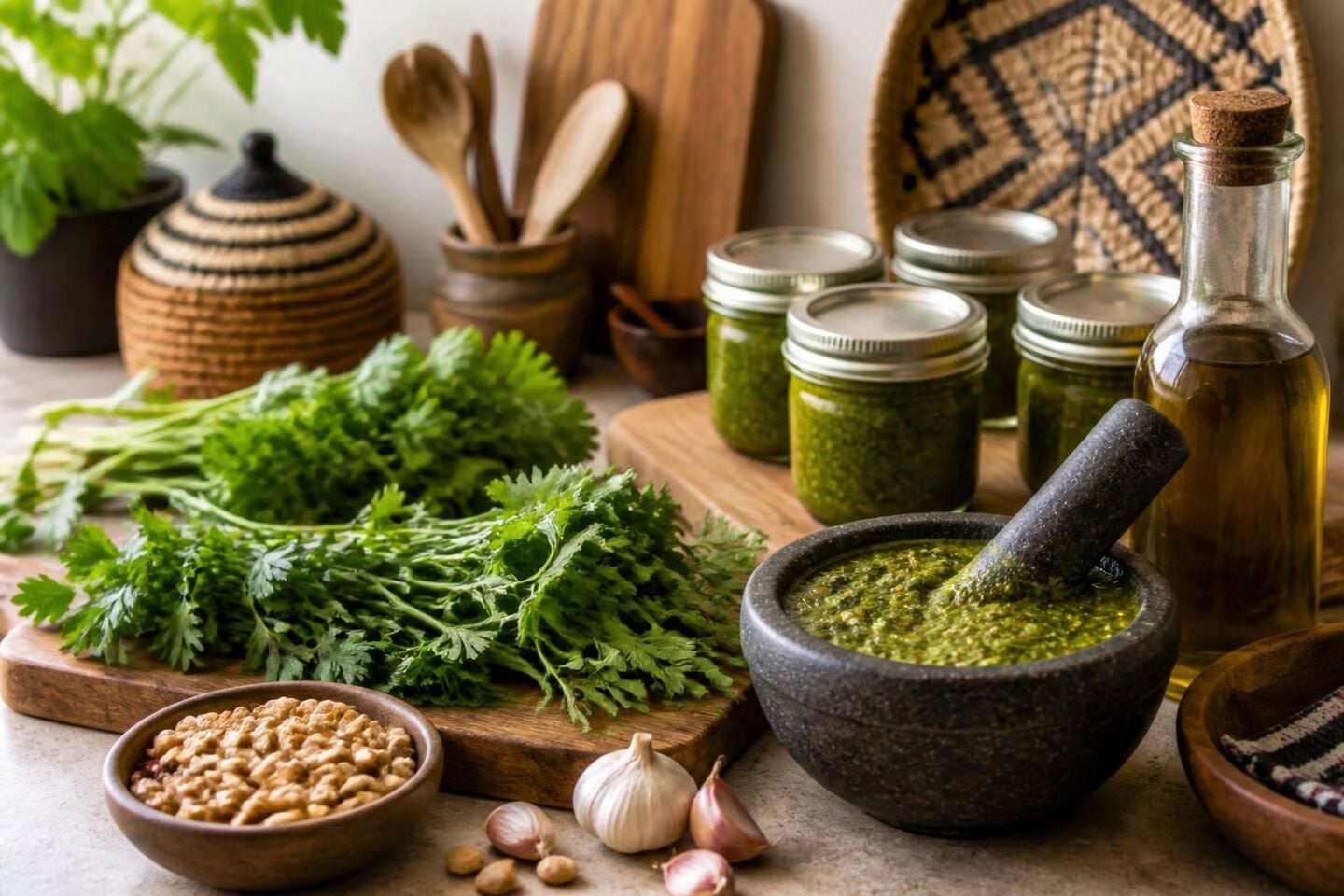
This pesto holds up well in the fridge and freezes without losing much flavor, making it a strong candidate for meal prep. A single batch gives you enough for several meals if you plan ahead.
How Long It Keeps
In the refrigerator, sealed in a glass jar with a thin layer of oil pressed over the surface, the pesto stays fresh for five to seven days. The herbs will darken slightly after day three, but the flavor remains good. Without the oil layer, expect browning within 24 to 48 hours.
In the freezer, it keeps for up to three months. Freeze it in ice cube trays, then pop the cubes into a freezer bag. Each cube gives you roughly one to two tablespoons, which is enough for a single serving.
Best Ways To Refresh Before Serving
Cold pesto straight from the fridge can taste muted. Let it sit at room temperature for 10 to 15 minutes before serving. If it has thickened overnight, stir in a teaspoon of water or a small squeeze of fresh lime juice to loosen it and brighten the flavor.
For frozen cubes, thaw them in the fridge overnight or set them on the counter for 20 minutes. Give the thawed pesto a quick stir, taste, and adjust the salt or acid if needed.
Batching For Weeknight Meals
Make a double batch on the weekend and portion it out. Use one portion as a marinade for Monday's chicken, another as a sauce for Wednesday's grain bowl, and freeze the rest in cubes for later. This approach saves you from pulling out the food processor on busy evenings.
Label your containers with the date so you can track freshness. Glass jars are better than plastic because they do not absorb odors and are easier to clean.
Frequently Asked Questions
What ingredients are typically used in a peanut-and-herb pesto?
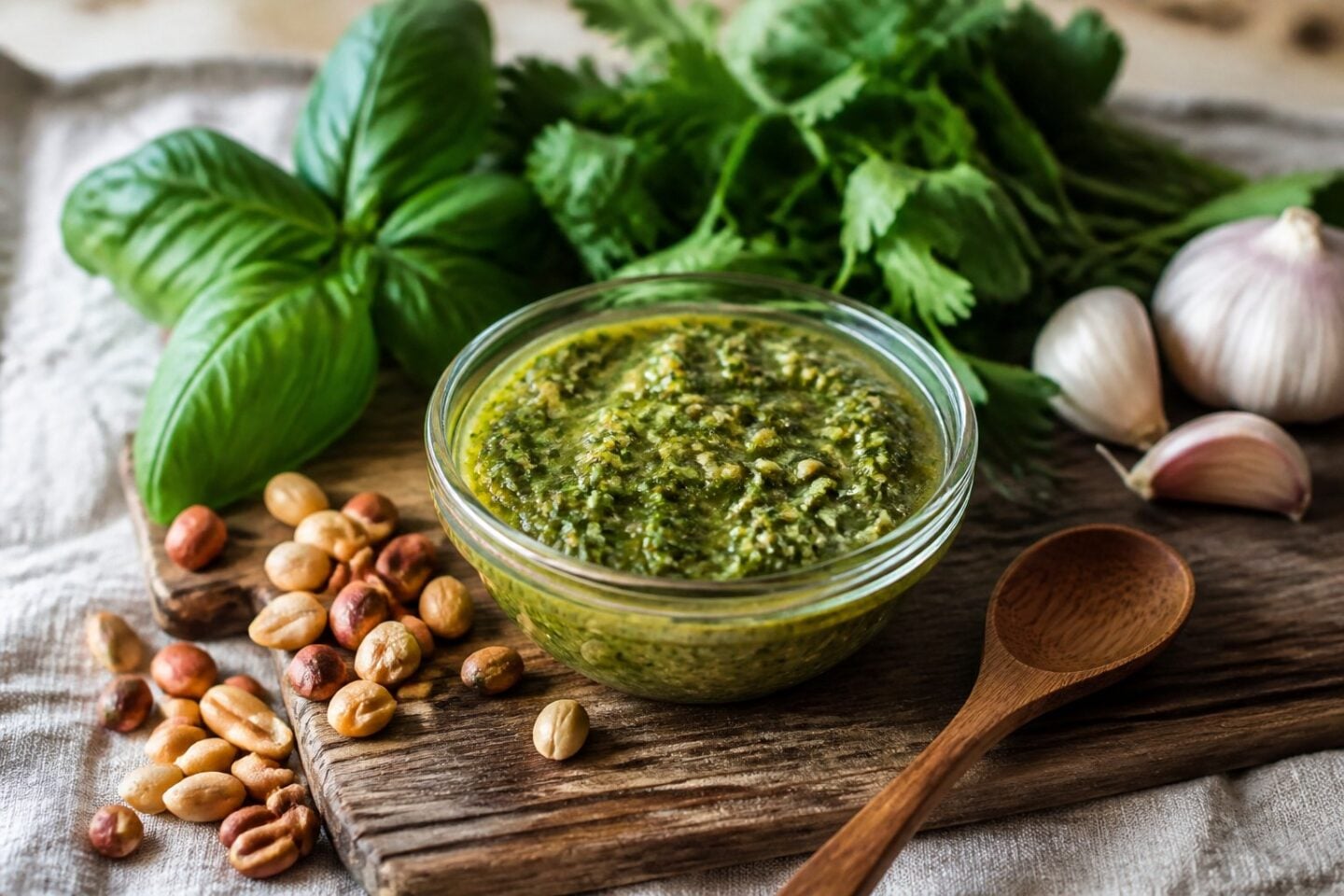
The core ingredients are roasted peanuts (or natural peanut butter), fresh cilantro, flat-leaf parsley, garlic, fresh ginger, a small fresh chile, lime or lemon juice, and a neutral oil like peanut or sunflower oil. Spices such as ground cumin, ground coriander, and smoked paprika round out the flavor profile.
Can peanut-based pesto be made without olive oil, and what are the best alternatives?
Yes, and many versions taste better without it. Peanut oil is the most natural match because it reinforces the nutty base without adding competing flavors. Sunflower oil and avocado oil are also good neutral options. Toasted sesame oil adds an interesting depth but should be used sparingly, about one teaspoon mixed with a milder oil.
Which herbs work best for a savory peanut pesto, and how should they be balanced?
Cilantro and flat-leaf parsley in roughly equal amounts create the best balance. Cilantro adds brightness and a faintly citrusy quality, while parsley provides a clean, grassy flavor that keeps the sauce from tasting too sharp. A small handful of fresh mint can be added for a cooling note, but it should not exceed about a quarter of the total herb volume.
What spices are commonly used in West African peanut stew, and how can they be adapted for a pesto?
West African peanut stew typically uses cumin, coriander, ginger, garlic, and sometimes cayenne or scotch bonnet peppers. For a pesto, you use the same spice logic but in smaller, more concentrated amounts since the sauce is not diluted by broth or tomatoes. A half teaspoon of ground cumin and a quarter teaspoon of ground coriander are good starting points.
How can you adjust a peanut-and-herb pesto for allergies or nut-free diets?
For a nut-free version, substitute roasted sunflower seeds or toasted pumpkin seeds for the peanuts. Both provide a similar richness and blend to a comparable texture. The flavor will be slightly different, less distinctly nutty, but the herb, garlic, and spice components still carry the sauce. Always check labels for cross-contamination if you are cooking for someone with a severe peanut allergy.
How long does peanut-and-herb pesto keep in the fridge or freezer, and what storage methods prevent separation?
In the fridge, it lasts five to seven days when stored in a sealed glass jar with a thin layer of oil on top to limit oxidation. In the freezer, it holds for up to three months. Freezing in ice cube trays prevents waste and makes portioning easy. To prevent separation after thawing, give the pesto a thorough stir and add a small splash of water or lime juice if it has thickened.
Leave a Reply