
Chlodnik is a cold beet soup from Polish cuisine that earns its place at the summer table through its combination of vivid color, tangy flavor, and genuine cooling effect. Unlike hot beet soups, this one is served straight from the refrigerator, thick with grated or chopped beets, stirred through with kefir or sour cream, and loaded with crisp cucumber, radishes, and fresh dill. The result is a bowl that is creamy, earthy, and bright all at once.

If you know borscht, you already have a rough frame of reference, but cold beet soup is a different eating experience. The dairy base softens the beet's earthiness and adds a gentle sourness. The raw vegetables keep each bite textured and fresh. A halved hard-boiled egg floated on top is traditional, and it rounds out the soup into something filling enough for a light lunch.
This guide covers what makes chlodnik distinct, how to choose the right beets and dairy, a complete recipe, and smart ways to serve and vary it at home.
Table of Contents
What Makes This Soup Distinct
Chlodnik stands apart from other beet soups primarily because it is cold, dairy-based, and built around raw or lightly cooked vegetables. The traditional full name, chłodnik litewski, connects it to Lithuanian culinary tradition, though it is thoroughly embedded in Polish cuisine today.
How It Differs From Hot Beet Soups
Hot red borscht, the kind served at Christmas in Poland, is a clear, deeply flavored broth. It uses beets for color and flavor, but it has no dairy and no raw vegetable crunch. Cold polish beet soup does the opposite: the dairy base is the soup itself, not a broth, and the raw cucumber, radishes, and herbs stay uncooked so they contribute texture and brightness.
The temperature difference also changes the flavor profile. Chilling intensifies the tangy notes from kefir or sour cream and softens the earthiness of the beets into something sweeter and more delicate.
Flavor, Texture, And Color At A Glance
The flavor is tangy, gently earthy, and creamy, with a clean herbal note from the dill. The texture is thick but pourable, with soft beet pieces and crisp vegetable bits throughout. The color is the most immediately striking quality: a vivid magenta or deep pink that comes from the beets bleeding into the dairy base.
The soup looks dramatic in a bowl, which is part of why it travels so well from a home kitchen to a summer table.
Polish And Lithuanian Names You May See
You may see this soup labeled as chłodnik, chłodnik litewski, or simply cold beet soup or cold borscht in English. The word chłodnik comes from the Polish word for cool or cold. Litewski means Lithuanian, referencing the dish's roots in the former Polish-Lithuanian Commonwealth. In practice, most Polish home cooks simply call it chłodnik.
Core Ingredients And Smart Substitutions
Getting the ingredients right makes a significant difference in color, flavor, and texture. The key decisions are which beets to use, which dairy product to build the base with, and which fresh vegetables and herbs to add at the end.
Choosing Beets, Beetroot, And Beet Greens
Young beets with their greens still attached are the traditional choice. In Polish, these are called botwinka or botwina. The small beetroots are sweet and tender, and the stems and leaves add an earthy, slightly bitter note that balances the dairy. If you find a bunch with fresh, firm leaves, that is the ideal starting point.
When young beets are not available, regular medium beetroot works well. You will want about 1 to 1 ½ pounds before peeling. Avoid golden or candy-striped beets here because they will not give you that signature pink color.
Pre-cooked vacuum-packed beets are a real shortcut option. See the variations section for more on that approach.
Picking The Right Dairy Base
The traditional base is soured milk, kefir, or sour cream, often used in combination. Kefir is the most practical choice for most US home cooks: it is widely available, already tangy, and blends smoothly with the beets. Sour cream adds richness and body.
Smetana, a Central and Eastern European style cultured cream, is richer and less sharp than standard American sour cream. If you can find it, it is excellent here. Full-fat plain yogurt is a reasonable substitute when kefir is not available, though the result is slightly less sour.
Avoid sweetened yogurt or any low-fat dairy that is watery. The soup needs substance.
Fresh Vegetables And Herbs That Matter Most
Cucumber and radishes are the two essential raw vegetables. English cucumber works well because the skin is thin and the flesh is crisp. Smaller, dimply pickling cucumbers, similar to Kirby cucumbers, are closer to what you would find in Poland.
Fresh dill is non-negotiable. It ties the whole bowl together. Scallions or fresh chives add a mild onion note. Add these right before serving if you plan to store the soup for more than a day or two.
RECIPE: Polish Cold Beet Soup (Chlodnik)
This cold beet soup recipe uses grated beets for a quicker cook time and a smoother base, while keeping the raw vegetables and herbs for crunch and freshness. The chłodnik recipe below serves four as a starter or two as a light lunch.
Ingredients
1 lb (450 g) fresh red beets, peeled
2 cups (500 ml) plain kefir, chilled
1 cup (250 ml) sour cream, chilled
1 English cucumber, finely diced (about 1 ½ cups)
4 to 5 radishes, thinly sliced
½ bunch fresh dill, chopped (about 2 tablespoons)
3 scallions, thinly sliced
2 tablespoons fresh lemon juice
1 small clove garlic, pressed
1 teaspoon salt, plus more to taste
¼ teaspoon ground black pepper
Pinch of sugar, optional
To Serve
4 hard-boiled eggs, halved or quartered
Extra dill and radish slices for garnish
Instructions
Cooking And Cooling The Beet Base
Wash and peel the beets. Using the large holes of a box grater, grate all the beets into a medium saucepan.
Add 1 cup of water, ½ teaspoon of salt, and the pressed garlic. Bring to a medium heat and cook, stirring occasionally, for 8 to 10 minutes until the beets are just tender. Do not overcook; they should still have a little body.
Remove from heat and stir in the lemon juice. Transfer the beet mixture to a large bowl and let it cool to room temperature, then refrigerate for at least 1 hour until fully cold.
Mixing In The Dairy And Raw Vegetables
Once the beet base is cold, stir in the kefir and sour cream. Mix until fully combined. The soup will turn a deep, vivid pink.
Add the diced cucumber, sliced radishes, scallions, and chopped dill. Stir gently.
Season with the remaining ½ teaspoon of salt, black pepper, and a pinch of sugar if the beets taste sharp. Taste and adjust lemon juice or salt as needed.
Chilling For The Best Flavor And Texture
Cover the bowl and refrigerate for at least 2 hours before serving, or overnight. The flavor deepens significantly after resting.
Ladle into chilled bowls. Place 1 to 2 halved hard-boiled eggs in each bowl and garnish with extra dill and radish slices. Serve immediately while cold.
How To Serve It Well
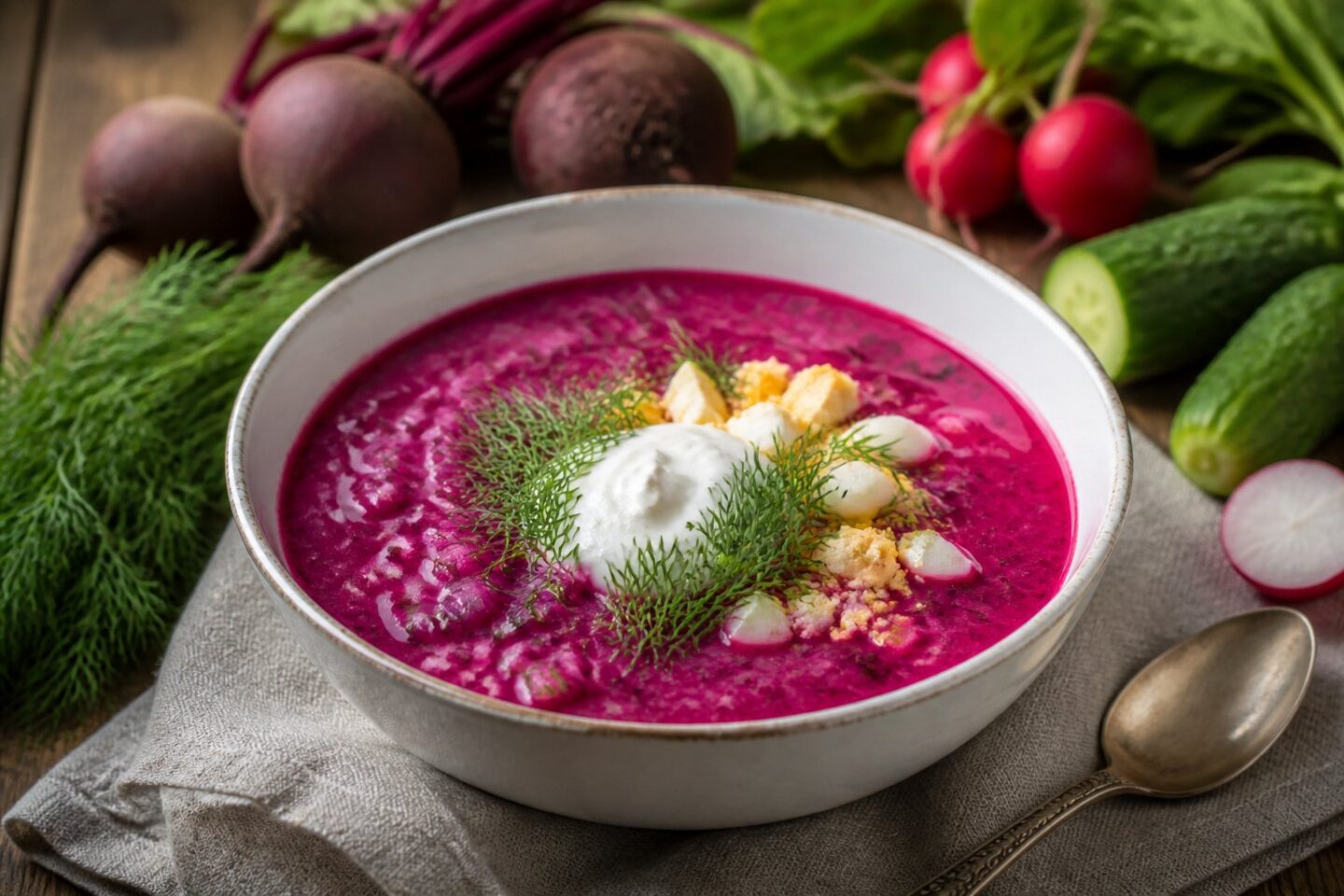
Getting the most out of this Polish soup means paying attention to what goes in the bowl and what comes alongside it. The soup itself is complete, but the right garnishes and sides lift it into a proper meal.
Classic Garnishes And Toppings
Hard-boiled eggs are the traditional and most important garnish in traditional Polish recipes. Halved or quartered, they float in the pink soup and add a rich, creamy contrast. Slice them cleanly so they look intentional.
Beyond eggs, the following work well:
Thinly sliced fresh radishes
A small spoonful of sour cream swirled on top
Extra chopped dill
Sunflower seeds or pumpkin seeds for crunch
A squeeze of fresh lemon juice just before serving
What To Serve On The Side
Chlodnik is light enough to serve as a starter but hearty enough to be a lunch on its own. When you want something alongside it, young boiled potatoes with a little melted butter are the most traditional pairing.
Toast or crusty bread works well too, either plain or rubbed with garlic. Some people add a small side of sliced cucumber and radishes, which echoes the flavors already in the bowl.
When To Make It And Serve It Cold
This soup is a summer dish. Make it when beets are in season and the weather pushes you away from hot food. In the US, that window runs from late June through August, which is also when young beets with greens appear at farmers markets.
Serve it directly from the refrigerator in chilled bowls. If the bowls are warm, the soup loses its edge quickly.
Variations, Shortcuts, And Related Dishes
Polish recipes for this soup vary by region, by season, and by what is in the refrigerator. There are practical shortcuts worth knowing, and a handful of related dishes that share the same spirit.
Using Pre-Cooked Or Jarred Beets
Pre-cooked vacuum-packed beets are sold in most US grocery stores and make this recipe significantly faster. Skip the cooking step and grate or finely chop the beets directly. Rinse them first to remove any excess liquid from the packaging.
Jarred pickled beets are not ideal for the base because the vinegar will overpower the dairy, making the soup taste sharp rather than tangy. If you use them, reduce the amount of lemon juice.
Lighter, Richer, And Dairy Swap Versions
For a lighter version, replace the sour cream with additional kefir or use low-fat kefir. The soup will be thinner and more tart. For a richer bowl, increase the sour cream and reduce the kefir, or use smetana if you can find it.
Botwinka, the young beet greens, can be blanched briefly and stirred in for added texture and a slightly more complex, earthy flavor. Some cooks also add a small amount of beet kvass for extra sourness and depth.
Other Polish Soups Readers May Also Like
If you enjoy chlodnik, the following Polish soups are worth exploring:
Polish borscht (barszcz): the hot, clear red version served at Christmas, sharp and deep in beet flavor
Cold cucumber soup (chłodnik ogórkowy): a cucumber-and-kefir soup with no beets, equally refreshing
Polish dill pickle soup (zupa ogórkowa): a warming, tangy soup made from grated sour pickles and broth, best in winter
Frequently Asked Questions
What is the difference between this chilled beet soup and borscht?
Hot borscht is a clear or semi-clear broth-based soup with deep beet flavor and no dairy. Chlodnik is thick, creamy, and cold, built on a kefir or sour cream base with raw vegetables stirred in. They share the same main ingredient, but they are completely different eating experiences.
Which beets work best, and should they be roasted, boiled, or pickled?
Standard red beets give the strongest color and flavor. Young beets with their greens attached are the traditional choice when in season. Boiling or grating and cooking briefly in water works well; roasting adds sweetness but is not necessary. Pickled beets will make the soup too sharp.
What are the best toppings and garnishes to serve with it?
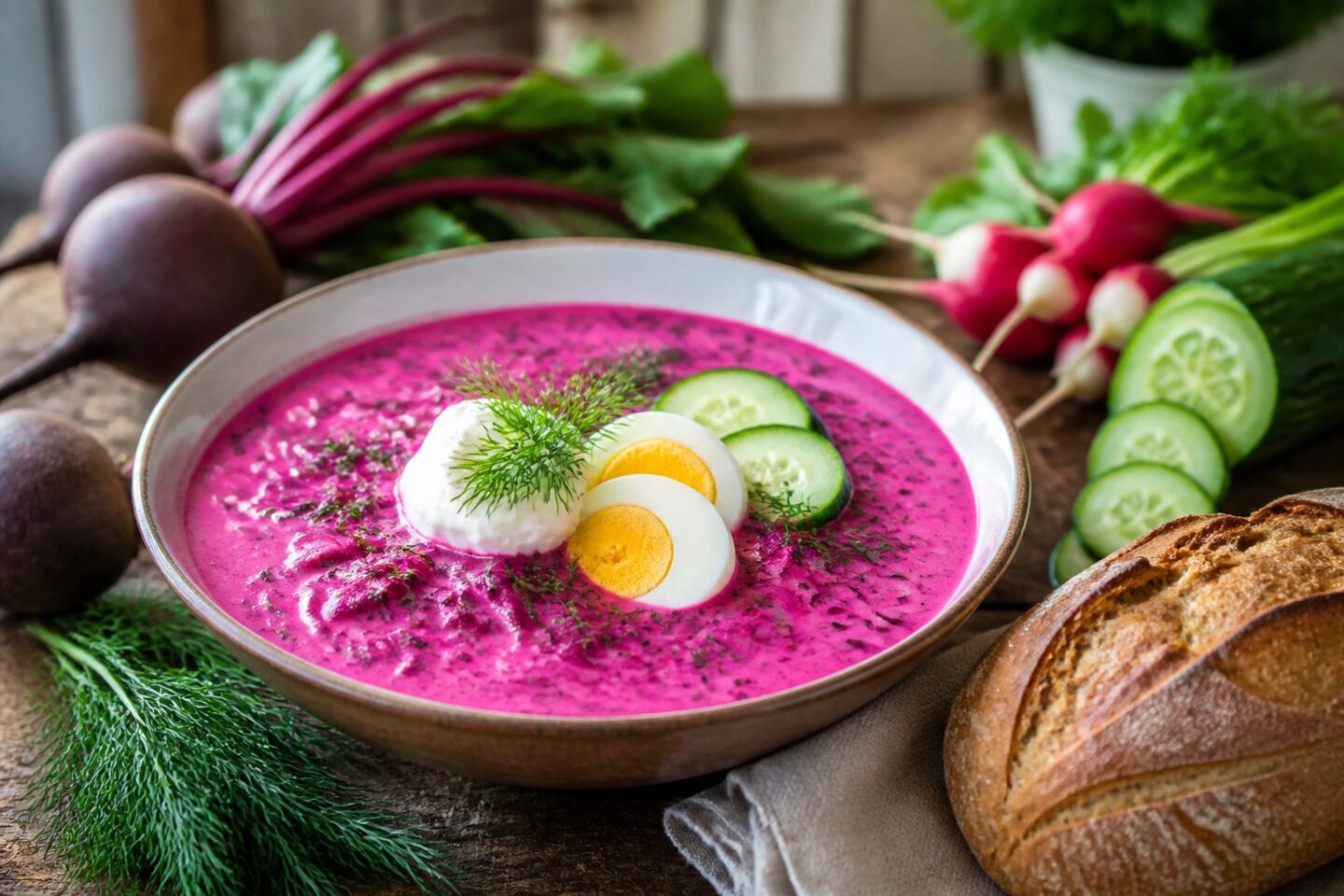
Halved hard-boiled eggs are the most traditional garnish and should always be included. Sliced radishes, a spoonful of sour cream, fresh dill, and a squeeze of lemon juice are all good additions. Sunflower seeds or pumpkin seeds add a pleasant crunch if you want more texture.
How can you adjust the thickness and tanginess to taste?
To thicken the soup, increase the ratio of sour cream to kefir. To thin it, add more kefir or a small splash of cold water. For more tanginess, add lemon juice in small amounts and taste as you go. A pinch of sugar balances the flavor if the soup tastes too sharp.
How do you keep the soup a vibrant pink without it turning dull?
The color stays bright when the beet base is fully cooled before you add the dairy. Adding lemon juice helps preserve the vivid magenta tone. Avoid overheating the beets during cooking, and serve the soup the same day or within two days for the best color.
Can it be made ahead, and how long does it keep in the refrigerator?
Chlodnik actually improves after resting overnight because the flavors blend together. It keeps well in a covered container in the refrigerator for up to five days. If you plan to store it beyond two days, hold back the fresh herbs and add them just before serving to prevent early spoilage.
Leave a Reply