
A Russian zakuska table works on contrast. Salty cured fish sits next to sour pickles, rich pork fat next to sharp garlic, cold aspic next to hot buttered potatoes. Each bite resets your palate for the next one, which is why a spread of small plates keeps a table busy for hours.
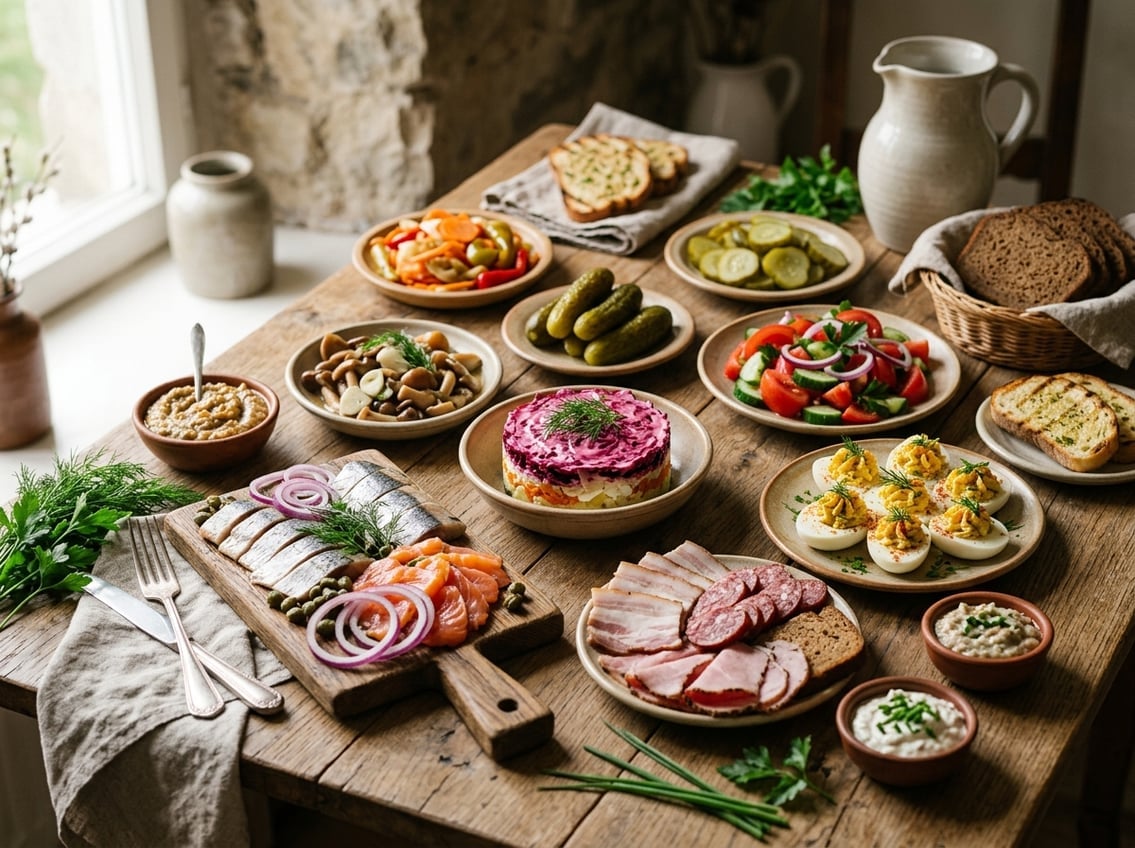
The word zakuska comes from the verb zakusit', meaning to take a small bite. Zakuski (the plural) are the cold and hot appetizers Russians serve before and alongside the main meal, closer in spirit to a Scandinavian smorgasbord than to a plated first course. Most of these dishes are made hours or days in advance, so the host sits at the table instead of standing at the stove.
The ten recipes below are the classics you will find on holiday tables from Moscow to Brooklyn. Every one of them includes full quantities and a step-by-step method, and most cost very little to make.
Quick picks:
Best overall: Salo with Borodinsky rye and raw garlic
Best make-ahead: Salt-pickled cucumbers, ready in three days
Best for newcomers: Grenki, crisp garlic rye croutons
Best showpiece: Red caviar on buttered toast
Table of Contents
- 1) Salo With Borodinsky Rye Bread and Garlic
- 2) Solyonye Ogurtsy (Russian Salt-Pickled Cucumbers)
- 3) Selyodka S Lukom (Herring With Onions and Buttered Potatoes)
- 4) Ikra on Buttered Toast (Red or Black Caviar)
- 5) Marinovannye Griby (Marinated Wild Mushrooms)
- 6) Kholodets (Meat Aspic With Horseradish)
- 7) Kvashenaya Kapusta (Sauerkraut With Cranberries)
- 8) Canaryki (Smoked Sprat, Egg, and Dill Mini Sandwiches)
- 9) Grenki (Crispy Garlic Rye Croutons)
- 10) Shproty Na Khlebe (Smoked Sprat and Cucumber Toasts)
- What is Russian Zakuska?
- How to Build and Serve a Zakuska Table
- Frequently Asked Questions
1) Salo With Borodinsky Rye Bread and Garlic
Salo is cured pork back fat, sliced paper-thin and eaten cold on dark rye. The cured slabs turn ivory white with a pink streak of meat, and the texture is firm at the edge and silky the moment it warms on your tongue. Salt, garlic, and black pepper do all the flavoring.
To make salo, pork back fat is stuffed with sliced garlic, thoroughly coated in a rub of coarse salt, cracked black pepper, caraway seeds, and bay leaves, and cured in the refrigerator for five days. The excess salt is then scraped away before the slab is frozen solid for easy slicing.
Serve it sliced paper-thin straight from the freezer over toasted Borodinsky rye bread rubbed with fresh garlic, alongside spicy mustard and extra coarse salt. It pairs exceptionally well with ice-cold vodka, dark kvass, or chilled sparkling water with lemon.
2) Solyonye Ogurtsy (Russian Salt-Pickled Cucumbers)
These cucumbers are fermented in salt brine with no vinegar at all, which gives them a sour, lightly fizzy tang and a deep olive-green color. The snap is loud, the brine is cloudy, and the dill and garlic come through in every bite. They are the single most useful thing on a zakuska table.
To make them, small pickling cucumbers are soaked in cold water for crispness, then packed upright into a jar with dill, smashed garlic, peppercorns, horseradish, and blackcurrant or cherry leaves. A simple dissolved salt brine covers the cucumbers, which ferment at room temperature for 3 to 5 days before moving to the refrigerator.
Serve the pickles cold, sliced lengthwise into spears and arranged in a shallow dish with a little brine spooned over the top.
The sour, salty crunch pairs naturally with ice-cold vodka, and the chilled leftover brine is famously sipped as a chaser. For non-alcoholic pairings, serve them alongside dark kvass, chilled sparkling water with lemon, or tonic water over ice.
3) Selyodka S Lukom (Herring With Onions and Buttered Potatoes)
Salt-cured herring fillets, raw onion, and hot boiled potatoes form the backbone of the Russian appetizer table. The fish is soft and deeply savory, the onion sharp and crunchy, the potatoes floury and swimming in butter. Together they hit salty, sweet, and rich in a single forkful.
To prepare the dish, salt-cured herring fillets are soaked to temper their salinity, sliced into bite-sized pieces, and arranged on a platter. Thinly sliced onions are quickly marinated in vinegar and sugar, then scattered over the fish with a drizzle of sunflower oil, fresh dill, and black pepper, accompanied by small boiled potatoes tossed in butter and dill.
Serve the chilled fish on a flat platter alongside a steaming bowl of hot buttered potatoes, allowing diners to alternate between the salty, sharp herring and the rich potatoes. Ice-cold vodka is the customary drink pairing, while chilled kvass, dry sparkling cider, or cold seltzer with lemon provide crisp non-alcoholic counterpoints to the salt and fat.
4) Ikra on Buttered Toast (Red or Black Caviar)
Red salmon roe on white bread and cold butter is the celebration bite of the Russian table, and it takes four minutes to put together. The eggs are glossy and bright orange, and they burst with a clean salty pop against the sweet, cool butter. Black sturgeon caviar is the luxury version, served the same way.
To make them, crustless white bread or baguette slices are lightly toasted and cooled, then spread generously with cold unsalted butter right to the edges. Spoon the roe on top using a non-metallic spoon, then finish each piece with finely chopped hard-boiled egg and a fresh dill sprig.
Arrange the toasts on a chilled platter with fresh lemon wedges and serve promptly before the bread softens. Ice-cold vodka, dry sparkling wine, or crisp seltzer with lemon make classic drink pairings that cleanse the palate between rich, briny bites.
5) Marinovannye Griby (Marinated Wild Mushrooms)
Small whole mushrooms simmered in a vinegar marinade come out slippery, springy, and sharply tangy, with garlic and bay running underneath. Honey mushrooms and porcini are traditional, though cremini and chestnut mushrooms work beautifully and are easy to find in any American market.
To prepare them, clean mushrooms are boiled in salted water and drained, then simmered in a brine spiced with bay leaves, peppercorns, allspice, and cloves. Vinegar and sliced garlic are stirred in during the final minutes of cooking before transferring the mushrooms and marinade into jars, topped with a float of sunflower oil, and chilled for two days.
Serve the mushrooms cold in a small bowl, tossed with thinly sliced red onion and fresh dill. Their sharp acidity cuts through rich, fatty dishes like salo and kholodets, pairing naturally with ice-cold vodka, dark beer, or chilled cranberry juice.
6) Kholodets (Meat Aspic With Horseradish)
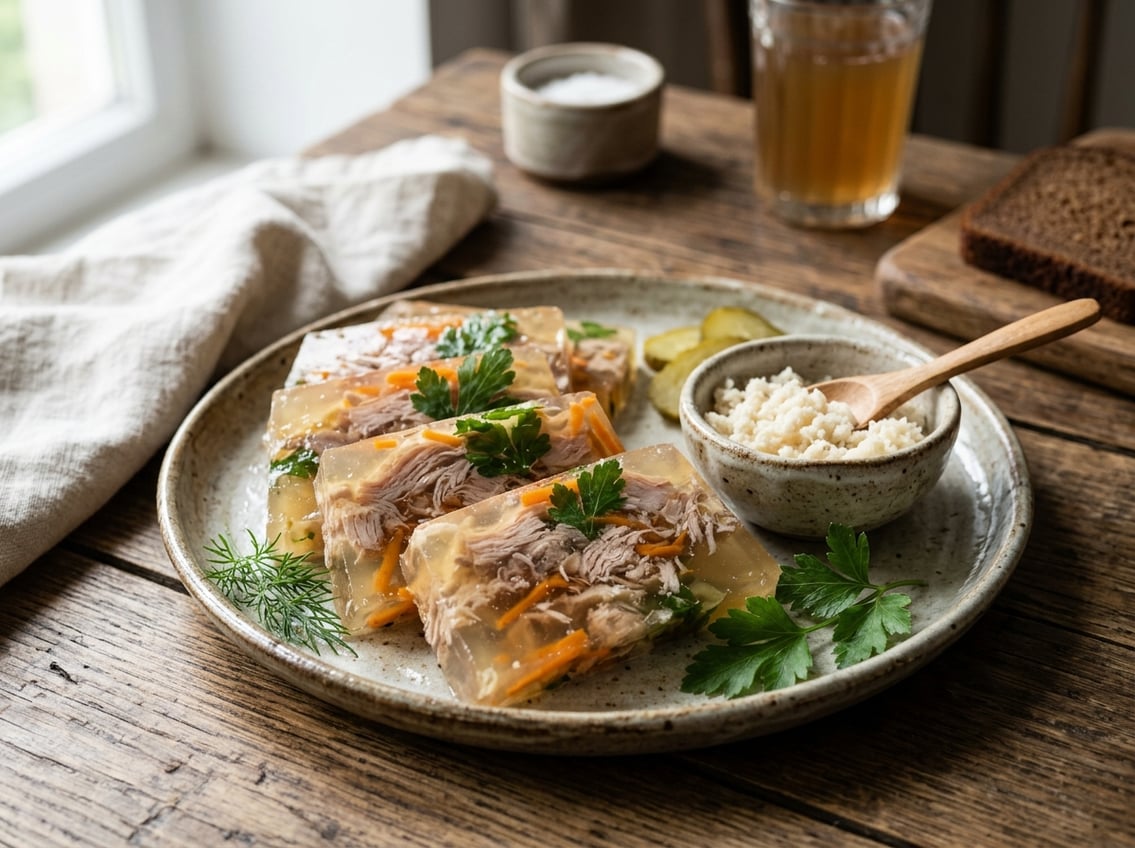
Kholodets is shredded pork and beef set in its own clear cooking jelly, no gelatin packets required. It arrives at the table as a pale amber slab flecked with meat, carrot, and parsley, and it melts on the tongue with a clean, garlicky, deeply meaty flavor. Sharp horseradish on the side is not optional in most households.
To make kholodets, soaked pork hocks and beef shank are simmered slowly for several hours with aromatics until the meat is tender and the collagen enriches the broth. The meat is then shredded, arranged in shallow dishes with cooked carrot slices, and covered with strained, garlic-infused broth before chilling until firmly set.
Serve the aspic cold, cut into squares straight from the refrigerator, alongside sharp prepared horseradish or Russian mustard. If guests prefer milder heat, a horseradish substitute provides a gentler alternative.
Ice-cold vodka is the classic pairing that cuts through the rich gelatin and meat. For non-alcoholic drinks, serve it with dark kvass, tart cherry juice, or chilled cranberry mors.
7) Kvashenaya Kapusta (Sauerkraut With Cranberries)
Russian sauerkraut ferments with shredded carrot and whole cranberries, so it comes out pale gold shot through with orange and red. The cabbage stays crunchy, the sourness is bright and clean, and the berries pop with a fruity sharpness that plain kraut never has.
To make it, shredded green cabbage and grated carrots are massaged with coarse salt and sugar until juices release and pool, then gently tossed with whole cranberries, caraway seeds, and bay leaves. The mixture is packed tightly into a jar beneath its own brine and fermented at room temperature for 3 to 4 days, with regular piercing to release gas, before chilling.
Serve the sauerkraut chilled and drained, tossed with sunflower oil and thinly sliced onions. Its crisp, tart bite stands up to rich, fatty dishes across the spread.
Ice-cold vodka is the customary drink pairing, while dark rye kvass, tart apple juice, or chilled sparkling water with lemon offer refreshing non-alcoholic counterpoints.
8) Canaryki (Smoked Sprat, Egg, and Dill Mini Sandwiches)
These bright yellow open sandwiches take their nickname from canaries, thanks to the grated egg and cheese topping. A smoky sprat sits on a garlicky egg-and-mayonnaise spread over toasted bread, and the result is soft, rich, and salty with a little crunch at the edges.
To make them, sliced baguette is toasted until crisp, then spread generously with a mixture of grated hard-boiled eggs, cheese, mayonnaise, garlic, and fresh dill. Each piece is finished with a smoked sprat, an optional cucumber slice for crunch, and a sprig of dill.
Assemble the toasts within an hour of serving so the bread stays firm, and arrange them on a platter near the center of the table. Their smoky, salty richness pairs naturally with ice-cold vodka, cold beer, dark kvass, or a tart lemonade.
9) Grenki (Crispy Garlic Rye Croutons)
Fried rye sticks rubbed with raw garlic are the most requested hot snack in any Russian kitchen. They come out dark brown and shatteringly crisp on the outside, still chewy in the center, and the garlic hits your nose before the plate reaches the table.
To make grenki, sticks of dark rye or Borodinsky bread are pan-fried in sunflower oil until dark and crisp outside while staying chewy inside. Straight from the skillet, they are seasoned with salt and rubbed with fresh garlic, served alongside a simple dip made from sour cream or mayonnaise, grated garlic, and dill.
Serve the croutons piping hot in a napkin-lined basket with the garlic dip on the side. Their intense garlic crunch pairs naturally with cold lager, ice-cold vodka, dark kvass, or chilled sparkling water with lemon.
10) Shproty Na Khlebe (Smoked Sprat and Cucumber Toasts)
Two golden-brown sprats laid across garlic-rubbed rye with a coin of fresh cucumber is the New Year's Eve bite of the Soviet era, and it has never left the table. The fish is oily and smoky, the cucumber cool and watery, the bread firm underneath. Three textures, about ten minutes of work.
To make them, slices of dark rye bread are toasted until crisp and rubbed while warm with fresh garlic cloves. Each piece is lightly coated with a lemon-and-dill mayonnaise spread, then layered with a crisp cucumber round, smoked sprats, a pinch of fresh dill, and cracked black pepper before chilling briefly to set.
Serve the toasts on a flat platter early in the gathering while guests mingle. Their rich smokiness and sharp garlic crunch pair naturally with ice-cold vodka, crisp cold beer, dark kvass, or a sharp ginger ale for a refreshing non-alcoholic option.
What is Russian Zakuska?
Zakuska is a Russian appetizer, and zakuski are the whole assortment of cold and hot small dishes served before or alongside the main meal. The name comes from zakusit', to take a small bite, built on kusok, a piece.
Most zakuski are salty, sour, fatty, or pickled. That flavor profile is deliberate, since each dish is meant to be eaten in a single mouthful and followed by something with the opposite taste.
Origin of the Zakusochnyi Stol (The Sideboard Table)
The zakuska table began as a separate piece of furniture. In 18th and 19th century noble homes, guests gathered around a zakusochnyi stol, a sideboard in a room next to the dining room, where they ate standing before sitting down to dinner.
French chefs working in Russia carried the idea home, and it shaped the European appetizer course. Inside Russia, the custom moved in the opposite direction and became democratic. By the Soviet period, the sideboard had merged with the dining table itself, and hosts crowded every dish onto one surface at once.
That crowded table is what most people picture today. Jars of pickles and mushrooms, a plate of cured fish, sliced rye, salads under mayonnaise, and hot potatoes arriving partway through.
Why is it important to serve zakuska?
Food is a fixed part of a Russian zastol'ye, the long sit-down gathering built around toasts. A host who pours drinks without setting out food is considered careless, and the phrase pit' bez zakuski carries real disapproval.
The rhythm is simple. Someone speaks a toast, everyone drinks, and then everyone reaches for a bite. That bite gives the table a natural pause, and the conversation picks up again in the gap.
Because the eating and the talking are woven together, a gathering stretches across several hours at a comfortable pace. The same rhythm holds when the glasses are filled with kvass, mors, or sparkling water.
How to Build and Serve a Zakuska Table
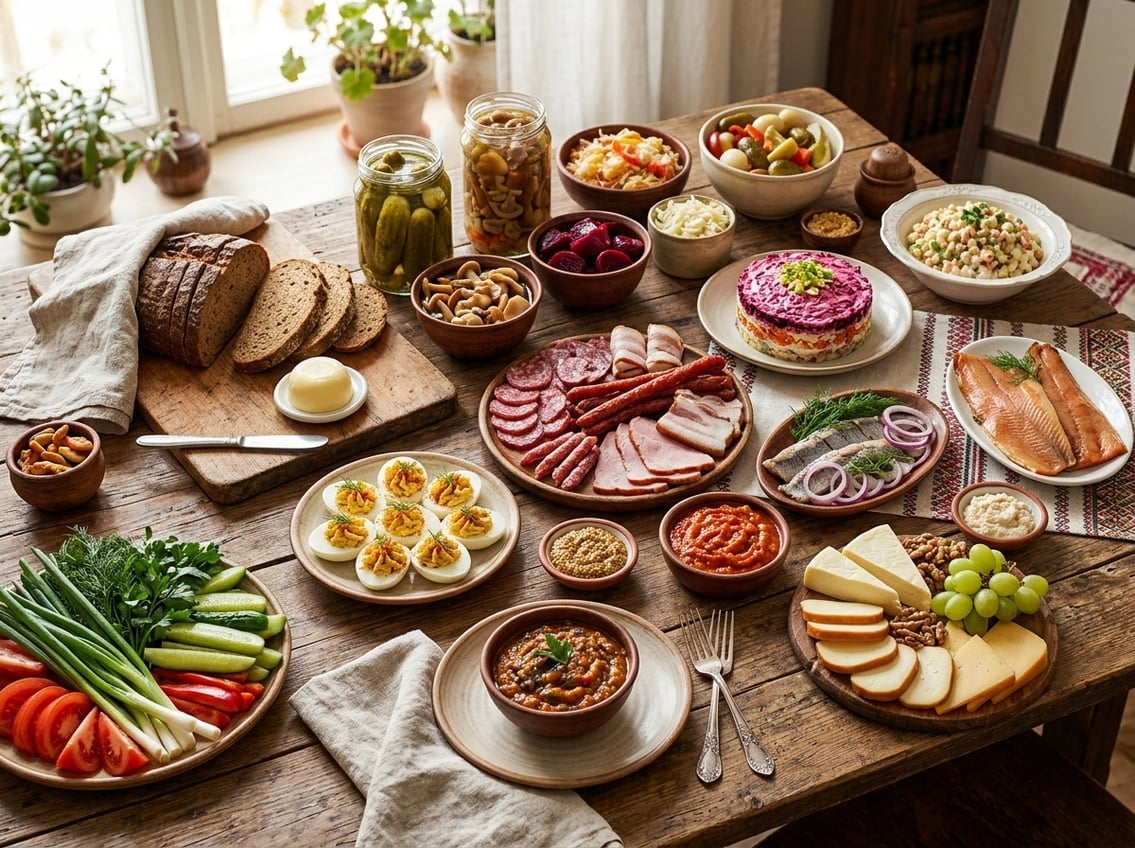
Aim for six to eight dishes that cover four tastes: salty (herring, sprats, caviar), sour (pickles, sauerkraut, mushrooms), rich (salo, kholodets, mayonnaise salads), and crunchy (grenki, fresh cucumber, radishes). Plan on two or three bites of each dish per guest.
Put everything out at once on one table. Small bowls and shallow plates work better than large platters, since guests reach across constantly and a crowded surface is part of the look.
Tips for Serving Cold and Hot Zakuski
Cold dishes go out first and stay out. Keep the caviar and herring over a hidden tray of ice, and pull the salo from the freezer only 10 minutes before slicing.
Hot dishes arrive in waves, roughly 30 to 45 minutes apart. Buttered potatoes come out with the herring, and grenki come out of the pan straight to the table so they stay crisp.
Give every dish its own small fork or spoon. Fish forks and pickle forks stop flavors from traveling between bowls.
What to Make Ahead and What to Serve Fresh
Ferments and cures need lead time, so start those first:
5 days ahead: salo cure
3 to 4 days ahead: salt-pickled cucumbers, sauerkraut with cranberries
2 days ahead: marinated mushrooms
1 day ahead: kholodets, soaked herring, hard-boiled eggs
Same day: grenki, all toasts, buttered potatoes, sliced cucumber
Toasts go soggy within an hour, so assemble the sprat and caviar pieces after guests arrive. A make-ahead Russian potato salad tastes better on day two, which makes it a useful anchor dish.
Which Non-Alcoholic Drinks Pair Well with Zakuska
Kvass is the traditional choice, a lightly fizzy fermented rye drink with a malty, faintly sour edge that suits pickles and rye bread. Bottled versions are sold in most Eastern European markets.
Mors, a chilled cranberry or lingonberry drink, cuts through fatty dishes like salo and kholodets. Tomato juice with black pepper and horseradish is another table staple, and it stands up to herring particularly well.
Cold sparkling water with lemon, tart apple juice, and strong black tea served late in the meal round out the options. Chilled pickle brine, poured into small glasses, is a savory choice worth offering to curious guests.
Frequently Asked Questions
What is zakuska in Russian cuisine?
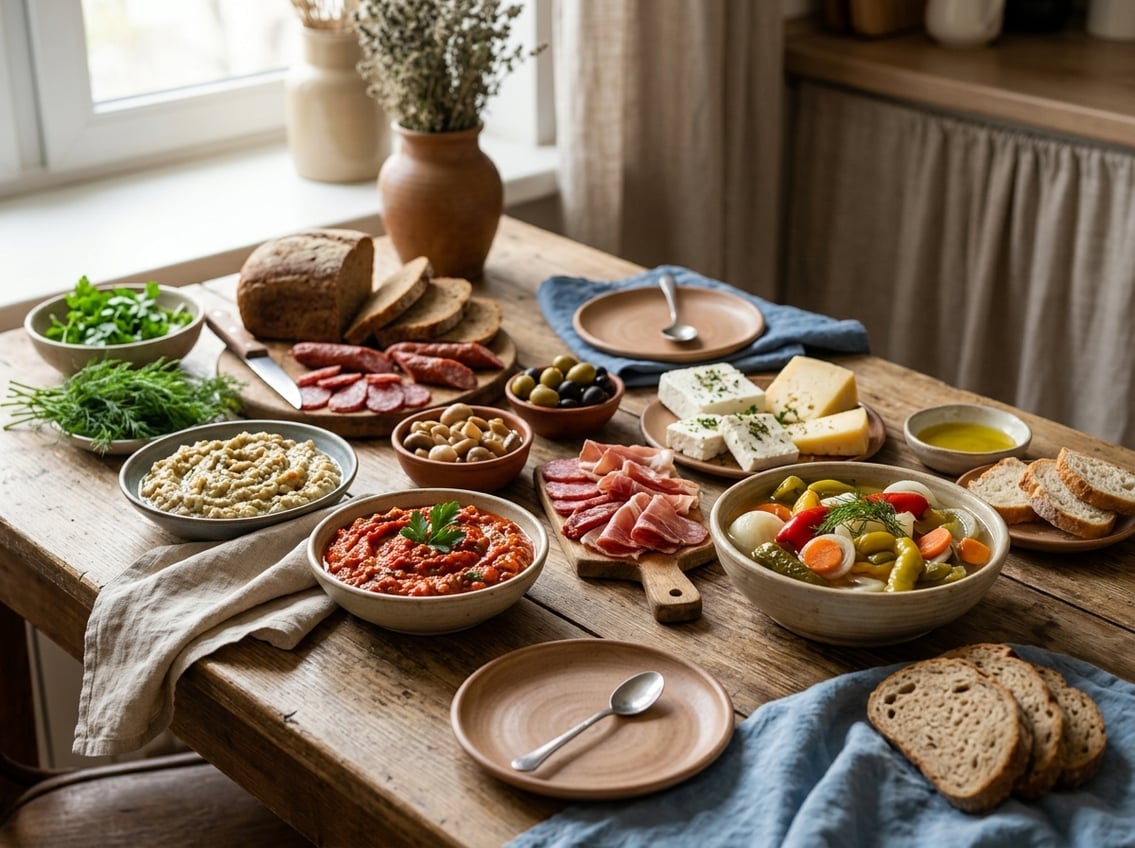
Zakuska is a small appetizer dish, and zakuski is the plural used for a whole spread of them. The word comes from zakusit', meaning to take a small bite, and the category covers everything from pickled mushrooms to hot garlic croutons.
What is the difference between zakuska and zacusca?
Zakuska is the Russian term for an appetizer course, while zacusca is a specific Romanian and Moldovan vegetable spread made from roasted eggplant and peppers. The names share a root, but zacusca is one recipe and zakuska is an entire category of dishes.
Is zakuska served hot or cold?
Both, and a good table has each. Cold zakuski like herring, pickles, and caviar toasts go out at the start and stay on the table, while hot ones like grenki and buttered potatoes come out in waves during the meal.
Can you serve zakuska without vodka?
Yes, and the food loses nothing. Kvass, mors, tomato juice with horseradish, and sparkling water with lemon all match the salty and sour flavors, and the toast-and-bite rhythm works the same with any glass in hand.
How do you prepare a traditional zakuska spread?
Choose six to eight dishes covering salty, sour, rich, and crunchy tastes, then work backward from your ferments. Cure the salo five days out, start the pickles and sauerkraut three days out, cook the kholodets the day before, and fry the grenki and assemble the toasts just before guests arrive.
What drinks and other dishes pair well with zakuska?
Kvass, mors, tomato juice, and chilled vodka are the classic drinks, while black bread, boiled potatoes, and mayonnaise-dressed salads are the standard supporting dishes. A cold soup such as okroshka works well as the course that follows the zakuska table, especially in warm weather.
Leave a Reply