
A boteco is a neighborhood bar in Brazil, usually small, usually loud, and always built around good food that arrives in shareable plates rather than formal courses. The snacks are called petiscos or tira-gostos, and they exist for one reason: to keep a table of friends eating, talking, and drinking for hours.
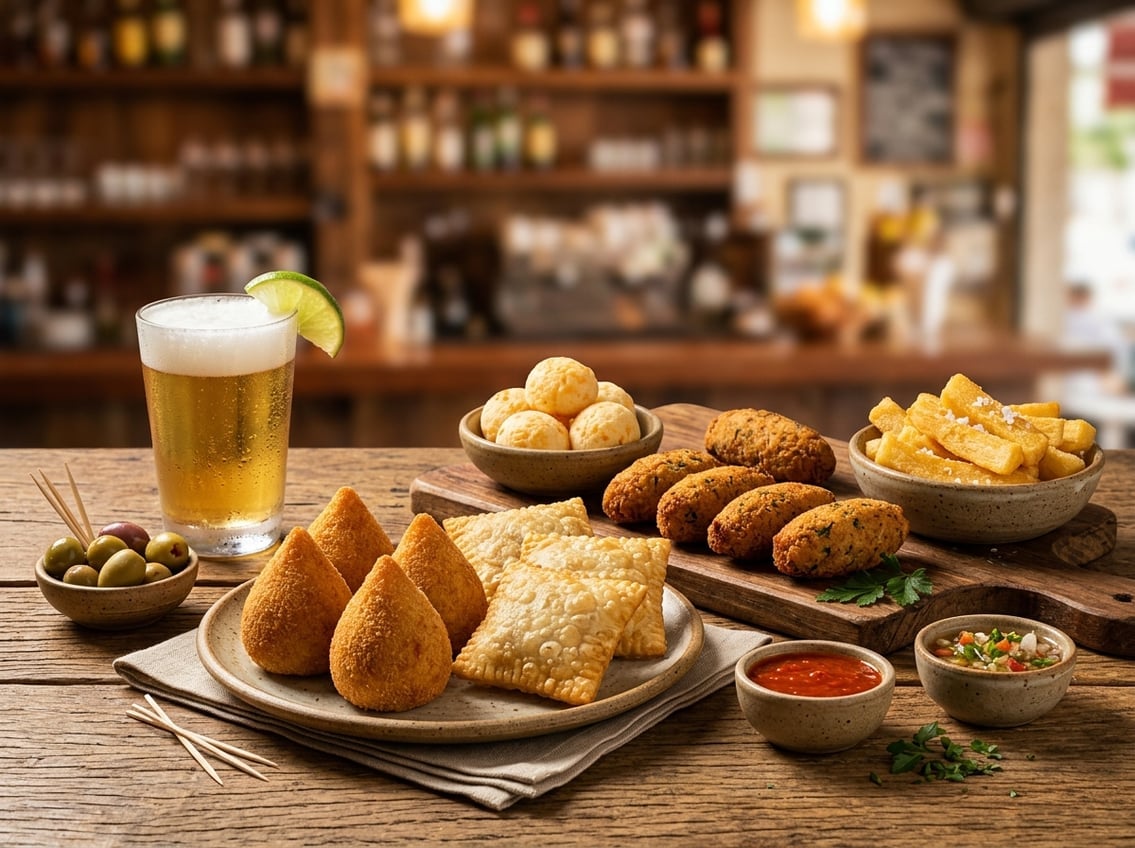
You do not need a bar to pull this off at home. The ten snacks below are the ones you will find on almost any boteco chalkboard, ranked from the most iconic crowd-pleasers to the deeper cuts, with realistic notes on sourcing ingredients in the U.S.
Most of these lean on frying, garlic, and salt, and nearly all of them can be prepped ahead. Pour something cold, put the platters in the middle of the table, and let people pick.
Table of Contents
- 1) Coxinha de Frango (Shredded Chicken Croquettes)
- 2) Torresmo (Extra-Crispy Pork Belly Cracklings)
- 3) Pastéis de Carne e Queijo (Crispy Fried Pastries)
- 4) Picanha na Chapa com Mandioca (Sizzling Sirloin Cap with Yuca)
- 5) Bolinhos de Bacalhau (Salt Cod Fritters)
- 6) Kibe/Quibe (Beef & Bulgur Wheat Croquettes)
- 7) Frango à Passarinho (Garlic & Herb Fried Chicken Cutlets)
- 8) Escondidinho de Carne Seca (Brazilian Shepherd's Pie in a Ramekin)
- 9) Caldo de Feijão (Rich Black Bean Soup Shots)
- 10) Coração de Frango Grelhado (Garlicky Grilled Chicken Hearts)
- How To Serve Boteco Snacks And Drinks
- Finding Brazilian Ingredients In The U.S.
- Frequently Asked Questions
1) Coxinha de Frango (Shredded Chicken Croquettes)
No snack says boteco faster than a coxinha. The name means "little thigh," and the teardrop shape mimics a chicken drumstick.
You cook a stiff dough of flour and chicken broth on the stove until it pulls away from the pan, then knead it warm until it turns smooth and elastic. Flatten a piece in your palm, tuck in shredded chicken, pinch it into a point, then roll it through batter and breadcrumbs.
Fried at 340°F, the shell turns deep gold and shatters when you bite it. Inside, the dough is soft and almost creamy, and the chicken filling is savory with onion, garlic, tomato, and parsley.
U.S. shortcut: pull a rotisserie chicken and use the meat for the filling. For the Catupiry-style cream inside, blend softened cream cheese with a spoonful of sour cream and a pinch of salt. It melts the same way.
Serve them piled on a platter with hot sauce and lime wedges on the side. They pair beautifully with ice-cold chopp poured into small glasses so it never warms up.
2) Torresmo (Extra-Crispy Pork Belly Cracklings)
Torresmo is pork belly fried until the skin blisters into glass. It is the definition of good food that is also loud, in the best way.
Cut skin-on pork belly into thick strips or batons, salt them, and let them sit uncovered in the fridge overnight so the skin dries out. Then fry twice: first low, around 275°F, to render the fat and cook the meat through, then hot, around 375°F, to blow the skin into blistered bubbles.
The result has three textures in one bite. Crackling skin on top, a soft layer of rendered fat, and a chewy strip of seasoned meat underneath.
Season straight out of the oil with coarse salt and a squeeze of lime. Many botecos serve it with a small bowl of vinaigrette-style molho campanha, chopped tomato, onion, and parsley in vinegar, which cuts the richness.
Pork belly is easy to find at most U.S. butcher counters and Asian markets. Ask for it skin-on; the skin is the whole point.
Put it in the center of the table with a chilled 600ml pilsner and let people reach for it between conversations.
3) Pastéis de Carne e Queijo (Crispy Fried Pastries)
Pastéis are thin, rectangular pastries fried until the dough puffs and bubbles across the surface. The crust is closer to a wonton than a hand pie: light, crackly, and slightly chewy at the sealed edges.
The two classic fillings are carne moída, ground beef cooked down with onion, garlic, tomato paste, and green olives, and queijo, simply mozzarella that melts into strings.
Roll the dough thin, spoon the filling on one half, brush the border with water, fold, and press the edges with a fork. Fry in hot oil, spooning oil over the top so the dough inflates.
U.S. shortcut: Goya empanada discs work well and are stocked in most supermarket freezer aisles. They fry up crisp and save you the rolling.
Serve them cut in half so guests can see the filling, stacked on a platter lined with paper. A bottle of pepper sauce nearby is standard.
Pastéis are traditionally washed down with sugarcane juice at street markets, but at a boteco table they go straight with cold beer.
4) Picanha na Chapa com Mandioca (Sizzling Sirloin Cap with Yuca)
This is the centerpiece plate. Sliced picanha arrives still sizzling on a cast-iron platter, surrounded by golden chunks of fried yuca.
Season the picanha with nothing but coarse salt. Sear it fat-cap down first to render, then finish the meat to medium-rare, rest it, and slice against the grain. Return the slices to a screaming-hot skillet with rings of onion and a few cloves of garlic so the edges char at the table.
The beef is beefy and mineral with a rich, crisp fat cap. The yuca is the opposite: fluffy and slightly sweet inside, crackly outside.
Sourcing: ask your butcher for top sirloin cap, coulotte, or rump cap with the fat left on. Brazilian and Hispanic markets sell it labeled picanha. Frozen yuca chunks are widely available and easier than peeling fresh cassava; boil until tender, dry them, then fry.
Set the whole skillet in the middle of the table with toothpicks. This one earns a caipirinha more than a beer.
5) Bolinhos de Bacalhau (Salt Cod Fritters)
Brazil's Portuguese roots show up clearly here. These football-shaped fritters are craggy and bronzed outside, light and fluffy inside.
Soak salt cod in cold water for 24 to 36 hours, changing the water three or four times, then poach it briefly and flake it, removing skin and bones. Fold the fish into mashed potato with beaten eggs, minced onion, garlic, and a heavy hand of parsley.
Shape the mixture between two spoons into quenelles and fry until deep golden. The flavor is salty and briny but rounded by the potato, with an oniony finish.
Sourcing: look for bacalao or baccalà at Hispanic, Italian, and Portuguese markets, often sold in wooden boxes or vacuum packs. Buy a thicker center-cut piece if you can; it flakes better.
Serve them hot with lime wedges and a small bowl of garlic aioli. Bolinhos are the classic partner for a cold, crisp lager or a glass of vinho verde if you want to lean Portuguese.
6) Kibe/Quibe (Beef & Bulgur Wheat Croquettes)
Kibe came to Brazil with Lebanese and Syrian immigrants and settled permanently into boteco menus. It looks like a small brown torpedo, pointed at both ends.
Soak fine bulgur wheat in cold water until it swells, squeeze it dry, then knead it with ground beef, grated onion, mint, and warm spices like allspice and cinnamon. Shape it around your finger into a shell, and if you want, stuff it with more seasoned beef or a spoonful of cream cheese.
Fried, the outside turns dark and nubby with a firm crunch, while the inside stays moist and lightly herbal from the mint.
Sourcing: fine bulgur is at Middle Eastern grocers, natural food stores, and most large supermarkets in the grain aisle. Get the finest grind available so the shell holds.
Squeeze lime over them just before eating and serve with a dish of labneh or plain Greek yogurt. Kibe holds up well at room temperature, which makes it a smart platter to set out early.
7) Frango à Passarinho (Garlic & Herb Fried Chicken Cutlets)
Frango à passarinho is fried chicken built for eating with your hands over a bar table. Small pieces, heavy garlic, no fuss.
Marinate cut-up chicken wings and small thigh pieces in lime juice, crushed garlic, salt, and black pepper for at least an hour. Dredge lightly in seasoned flour or cornstarch and fry until deep golden and crackly.
The finishing move matters most. Toss the hot chicken in a pan with a generous amount of sliced garlic sizzled in oil until just blond, then shower it with chopped parsley and green onion.
The skin stays crisp, the meat is juicy, and the garlic turns nutty and sweet rather than sharp. Lime wedges are not optional.
Pile it high on a shared platter with the garlic bits scattered across the top, because those bits are what people fight over. This is the snack that most demands a big bottle of pilsner shared into small glasses around the table.
8) Escondidinho de Carne Seca (Brazilian Shepherd's Pie in a Ramekin)
Escondidinho means "little hidden thing," and the name describes the build: shredded dried beef hidden under a blanket of creamy cassava purée, baked until the top browns.
Start with carne seca or carne de sol, salted dried beef. Soak it overnight, changing the water, then boil, shred, and sauté it with onion, garlic, and butter until the strands crisp at the edges.
Boil peeled yuca until falling apart, then mash it with milk, butter, and a little cream until it turns silky and slightly stretchy. Layer beef on the bottom, purée on top, add shredded cheese, and bake until bubbling.
The contrast is the point: salty, chewy beef against smooth, mild purée with a browned cheese lid.
U.S. substitutes: Hispanic markets sell carne seca or tasajo that works well. If you cannot find it, salt-cure your own with chuck, or use shredded brisket seasoned aggressively with salt.
Bake individual portions in small ramekins so each guest gets a personal one. Serve with small spoons and a caipirinha to cut the richness.
9) Caldo de Feijão (Rich Black Bean Soup Shots)
Late in the night, botecos start pouring caldinho de feijão into small cups. It is thick, dark, and deeply savory, and it settles a stomach that has been running on fried food.
Cook black beans with bacon, garlic, onion, and a bay leaf until very soft, then blend part or all of the pot until smooth. Thin it with the cooking liquid until it pours like heavy cream.
Finish with sautéed bacon or linguiça, a spoon of the bean broth reduced down, and a scatter of green onion. Some places add a splash of cachaça to the pot.
Serve it in small glasses or espresso cups, topped with crisp bacon bits and a dusting of toasted farofa if you have it. Guests hold them one-handed while they talk.
The flavor is earthy and smoky with a silky body. It bridges perfectly between rounds of beer and works as the transition snack before the last drink of the night.
10) Coração de Frango Grelhado (Garlicky Grilled Chicken Hearts)
Grilled chicken hearts are a churrasco staple that carried straight over to boteco tables. If you have never tried them, they taste like a cleaner, more concentrated version of dark meat, with a firm, springy bite.
Trim any fat and rinse the hearts well. Marinate them in garlic, coarse salt, and a little lime juice for an hour, then thread eight or ten onto each skewer, packed snug so they stay juicy.
Grill over high heat, turning often, until the outsides char and the fat crackles. Total time is short, roughly six to eight minutes. Overcooking turns them rubbery, so pull them while they still have give.
Sourcing: chicken hearts are inexpensive and easy to find frozen at Hispanic, Asian, and Brazilian markets, and many butcher counters will order them.
Slide them off the skewer onto a shared plate and hit them with lime and flaky salt. Set out a bowl of molho vinagrete alongside. These are made for beer, one skewer per hand, standing around the grill.
How To Serve Boteco Snacks And Drinks
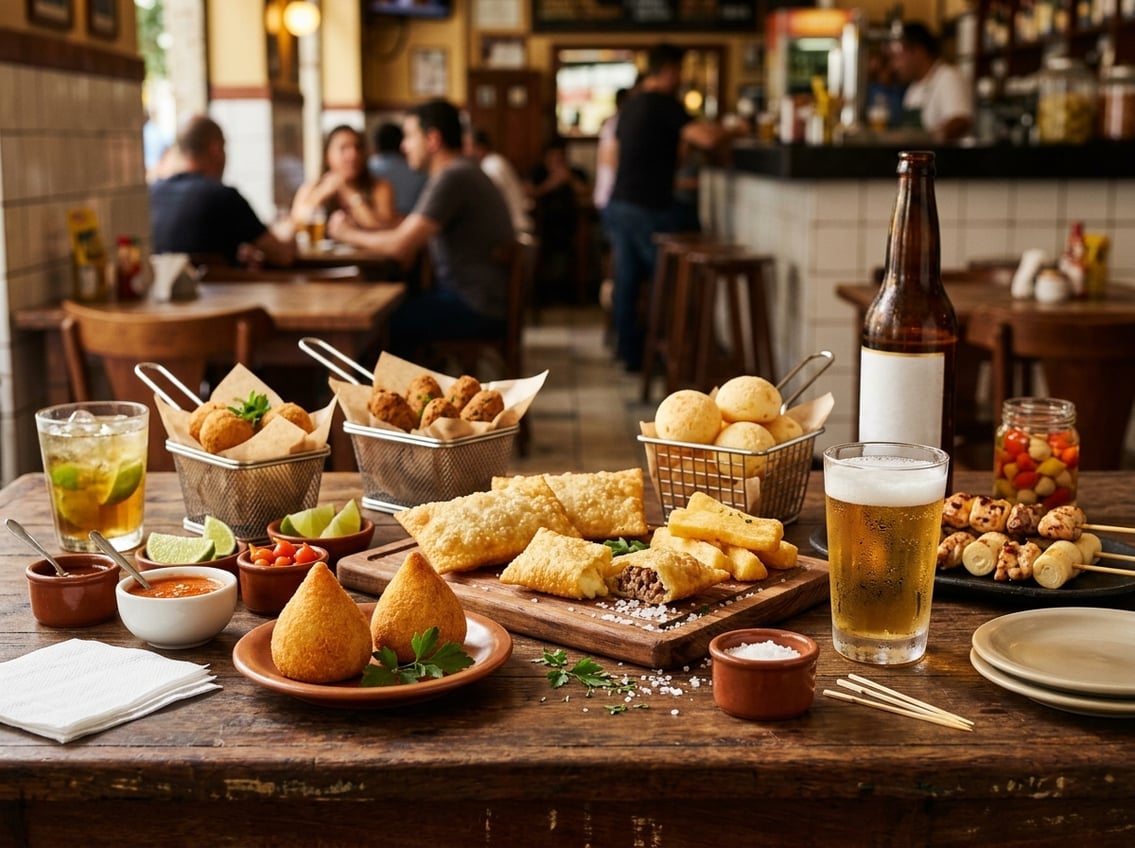
Serving good food is only half of the experience. How you put it on the table shapes the whole night.
Share Petiscos On Central Platters
Nothing gets plated individually. Snacks land in the middle of the table on large platters, and everyone picks with their hands or a toothpick.
Send food out in waves rather than all at once. Fry a batch of coxinhas, put them down, let people eat, then fire the next thing. Keep toothpicks, lime wedges, napkins, and a couple of pepper sauces permanently within reach.
Pour Chopp Or Keep 600ml Beer Bottles Cold
Chopp is unpasteurized draft beer served in small glasses with a thick head of foam. The small glass is deliberate: you finish it before it warms.
If you do not have a keg, do what most botecos do and buy 600ml bottles of pilsner. Keep them in insulating neoprene sleeves, called camisinhas, and pour shared rounds into small glasses. A bottle of Brahma, Antarctica, or any crisp American lager works.
Pair Rich Snacks With Caipirinhas
Cachaça, lime, sugar, ice. Muddle the lime wedges with sugar first so the oils in the peel come out, then add cachaça and crushed ice.
The acidity slices through fried food. Pour caipirinhas alongside torresmo, picanha, and escondidinho, where the richness needs a counterweight. Keep them short and strong rather than large and diluted.
Create A Relaxed Saideira Atmosphere
Saideira means "the one for the road," the last drink before everyone leaves. In practice, it gets ordered three or four times.
Do not rush people out. Keep music at conversation volume, refill without asking, and put out one more small plate when the table starts to thin.
Finding Brazilian Ingredients In The U.S.
You can cook nearly all of this from a regular American supermarket plus one trip to a Hispanic or Asian market.
Smart Substitutes For Catupiry And Carne Seca
Catupiry is a soft, mild Brazilian requeijão cheese sold in a wooden tub. Brazilian markets carry it, and some online grocers ship it.
If you cannot get it, blend 8 ounces of softened cream cheese with 2 tablespoons of sour cream, a splash of milk, and a pinch of salt until it is spreadable and glossy. It melts and behaves the same way inside a coxinha or kibe.
For carne seca, Hispanic markets sell tasajo or carne seca that soaks and shreds identically. Shredded brisket, heavily salted, is a workable stand-in.
Where To Buy Picanha, Yuca, Salt Cod, And Chicken Hearts
Picanha: ask a butcher for top sirloin cap or coulotte with the fat cap on. Costco and many Hispanic markets stock it.
Yuca: frozen chunks are cheaper, more consistent, and already peeled. Look in the freezer aisle near the plantains.
Salt cod: sold as bacalao at Hispanic markets and baccalà at Italian ones, usually near the fish counter or in boxes.
Chicken hearts: frozen tubs at Hispanic, Asian, and Brazilian grocers. Ask the butcher counter if you do not see them.
Essential Frying And Grilling Staples
Stock coarse sea salt, plenty of garlic, limes by the bag, and a neutral oil with a high smoke point like canola or peanut.
Add fine bulgur, manioc flour for farofa, and a bottle of cachaça. A heavy pot with a thermometer and a couple of metal skewers cover the equipment.
Frequently Asked Questions
What are traditional boteco menu items?
Traditional boteco menus are built on petiscos: coxinha, torresmo, pastéis, bolinho de bacalhau, kibe, frango à passarinho, and grilled chicken hearts. Most are fried or grilled, priced low, and made to eat by hand. Caldinho de feijão and picanha na chapa round out the heavier end of the list.
What are the most popular Brazilian boteco snacks?
Coxinha and torresmo top nearly every list, followed closely by pastéis and frango à passarinho. These four show up in botecos across Brazil because they are fast to fry, easy to share, and pair naturally with cold beer. Bolinho de bacalhau is the most common Portuguese-rooted option.
What are easy boteco-style snacks to make at home?
If you want to make good food quickly, torresmo and frango à passarinho are the simplest, since both are mostly salt, garlic, lime, and hot oil. Pastéis get easy fast if you use store-bought empanada discs. Kibe can be shaped hours ahead and fried right before guests arrive.
How do I pair boteco-style snacks with various alcoholic beverages?
Match acidity and carbonation to fat. Light lagers and chopp cut through fried snacks like coxinha and pastéis, while lime-forward caipirinhas balance rich items like picanha, torresmo, and escondidinho. Caipirinhas made with vodka, called caipiroskas, work if cachaça is too assertive for your guests.
Which snacks pair best with beer at a boteco?
Anything fried and salty. Torresmo, frango à passarinho, and grilled chicken hearts are the strongest beer matches because the salt and char make you reach for the next cold glass. Serve them with lime wedges and a bowl of molho vinagrete to keep the palate fresh.
Leave a Reply